GOVERNOR ANNOUNCES STATEWIDE LAUNCH OF FREE ONLINE JOB TRAINING PROGRAM FOR UNEMPLOYMENT CLAIMANTS

HARTFORD, CT) – Governor Ned Lamont announced the statewide expansion of a program that will make free online learning licenses available to recipients of unemployment insurance, including those who have been impacted by the economic fallout of the COVID-19 public health crisis. The SkillUp CT program will significantly expand access to comprehensive online course work from a leading global provider for thousands of Connecticut residents. Originally launched in eastern Connecticut, a sustained rollout of the program across the state over the coming weeks will enable recently laid-off workers to upgrade their skills and earn industry-recognized certifications even while the doors to most brick-and mortar education and training providers remain closed.


The program is coordinated by the Connecticut Workforce Development Council in collaboration with the Connecticut Governor’s Workforce Council and the Connecticut Department of Labor. Based on a successful model implemented by the Eastern Connecticut Workforce Investment Board, it is being offered through Connecticut’s five regional workforce development boards.


Eligible Connecticut residents will receive email instructions on obtaining a Metrix Learning license that provides them access to about 5,000 online Skillsoft courses in areas such as information technology, business analysis, customer service, project management, and digital literacy, among others. Anyone with an internet connection and a computer can access courses. SkillUp CT also offers training tracks leading to over 100 industry certifications and will provide career coaching through the workforce boards.


“The COVID-19 pandemic has created an incredibly difficult situation for so many people, and this innovative and responsive initiative gives hard-working Connecticut residents a beneficial training opportunity that they can utilize from their own homes,” Governor Lamont said.


“Governor Lamont created the Governor’s Workforce Council to give Connecticut residents access to workforce development services that prepare them for 21st century jobs,” Garrett Moran, chair of the Governor’s Workforce Council and the governor’s principal advisor on workforce development, said. “This innovative program enables us to make good on this promise despite the distancing requirements that have shut down classroom training and confined people to their homes. The SkillUp CT program will give Connecticut residents who have been forced to file for unemployment at-home access to the same high-quality training courses used by many Fortune 500 companies.”


The program will be funded by the Connecticut Health and Educational Facilities Authority (CHEFA) under an existing grant to the state’s five regional workforce boards.


“CHEFA is proud to have partnered with Connecticut’s workforce development boards to continue to build a trained, skilled workforce,” CHEFA Executive Director Jeanette W. Weldon said. “We’re pleased that during these extraordinary times, CHEFA funding helped the workforce boards expand online training offerings to jobseekers while most classroom training options are unavailable.”


To enroll in SkillUp CT, unemployment insurance claimants in Connecticut should visit ct.metrixlearning.com/landing.cfm

About the Connecticut Workforce Development Council (CWDC)

The CWDC is comprised of the directors of Connecticut’s five regional workforce development boards (WDB) and exists to facilitate communication and collaboration among the WDBs. The WDBs are responsible for planning and facilitating all state and federal workforce development efforts in Connecticut’s five workforce regions. In partnership with the Connecticut Department of Labor and other partners, the WDBs operate a statewide network of 18 American Job Centers that provide workforce assistance to jobseekers and businesses through a seamless service delivery system.


About the Connecticut Governor’s Workforce Council (GWC)

The GWC was established in October 2019 by Governor Lamont and tasked with improving Connecticut’s education and training ecosystem and pipeline so that all residents are able to access high-quality and affordable training and education that are aligned to the needs of businesses. The GWC will submit a report to the governor and legislature by January 1, 2021 that makes strategic recommendations to improve the state’s workforce system.


About the Connecticut Health and Educational Facilities Authority (CHEFA)

CHEFA is a quasi-governmental agency created to help Connecticut-based nonprofit organizations raise the funds needed to meet their goals of improving the health and education of Connecticut citizens. CHEFA accomplishes this by providing tax-exempt financing and other financial assistance to educational institutions, healthcare providers, childcare providers, and other eligible nonprofit entities. Since its inception in 2002, CHEFA grant programs have provided more than $33 million to Connecticut nonprofit organizations. CHEFA grant programs utilize no State of Connecticut funds. For more information visit www.chefa.com


This press release was made possible by:


BMW covid 1
For more information see:
https://www.bmwofbridgeport.com/precisioncare-powered-by-clorox-total-360/

Attorney General Wants Enforcement On Telemarketers

Hartford, CT) – Attorney General William Tong today joined a bipartisan coalition of 52 attorneys general in calling on USTelecom and its Industry Traceback Group (ITG) to expand its collaboration with state attorneys general by bolstering technological capabilities to improve enforcement against illegal robocallers.

In a letter to USTelecom— the leading organization representing telecommunications– the coalition urges further development of robocall traceback and other tools suited to law enforcement needs.

“Robocalls are annoying and incessant, and often fraudulent. Attorneys general across the country are working closely with the telecom industry to strengthen our ability to track and trace these scammers and hold them accountable. Our bipartisan letter today outlines several important steps the industry can take to build on that partnership, and to crack down on these unwanted, intrusive and illegal calls,” said Attorney General Tong.

The letter asks USTelecom to advance the ITG’s abilities in identifying robocall campaigns, trends and business ecosystems; conducting automated traceback investigations; and coordinating with relevant law enforcement agencies.

The coalition asks USTelecom to develop and roll out an online platform to collect live data from carriers and robocall-blocking apps. When USTelecom or a law enforcement agency detects an illegal robocall campaign, the law enforcement agency could then submit a subpoena to USTelecom in a streamlined online portal.

The process would allow for rapid review by USTelecom and provide law enforcement agencies the ability to expedite subpoena procedures and access the platform to quickly retrieve relevant data. The platform would bolster law enforcement investigations and could potentially lead to attorneys general offices issuing temporary restraining orders that could stop a live robocall campaign in its tracks.

The coalition’s letter follows a January 2020 meeting in Washington, D.C., with representatives from state attorneys general offices, federal agencies and the telecom industry. Some priorities developed at that meeting include:

  • Automating and increasing the total volume of traceback investigations;
  • Alerting relevant law enforcement agencies of suspected illegal robocall campaigns;
  • Enabling law enforcement agencies to electronically upload and receive responses to subpoenas and civil investigative demands, and providing swift response to those requests; and
  • Identifying noncooperative Voice Service Providers, including those that don’t participate in the traceback process, repeatedly originate or accept illegal robocalls, or repeatedly fail to provide sufficient records.

The coalition believes these measures would strengthen the partnership between the USTelecom-backed ITG and attorneys general, a relationship that led to the creation of the Anti-Robocall Principles. Those principles were established in August 2019 when 51 attorneys general and 12 major telecom providers took aim at reducing the number of unwanted and illegal robocalls reaching the American people.

More recently – and due in part to the support from the telecommunications industry and state attorneys general – the Telephone Robocall Abuse Criminal Enforcement and Deterrence (TRACED) Act was signed into law by the federal government. This law enables the industry to develop call-authentication protocols to combat caller-ID spoofing and implement other sweeping anti-robocall measures.

The letter was co-led by Michigan Attorney General Dana Nessel and Ohio Attorney General Dave Yost and was signed by the attorneys general Alabama, Alaska, American Samoa, Arizona, Arkansas, California, Colorado, Connecticut, Delaware, the District of Columbia, Florida, Georgia, Hawaii, Idaho, Illinois, Indiana, Iowa, Kansas, Kentucky, Louisiana, Maine, Maryland, Massachusetts, Minnesota, Mississippi, Missouri, Montana, Nebraska, Nevada, New Hampshire, New Jersey, New Mexico, New York, North Carolina, North Dakota, Oklahoma, Oregon, Puerto Rico, Rhode Island, South Carolina, South Dakota, Tennessee, Texas, Utah, Vermont, Virginia, Washington, West Virginia, Wisconsin, and Wyoming.


This press release was made possible by:

 

Bridgeport News: Three arrested, two police injured, drugs seized

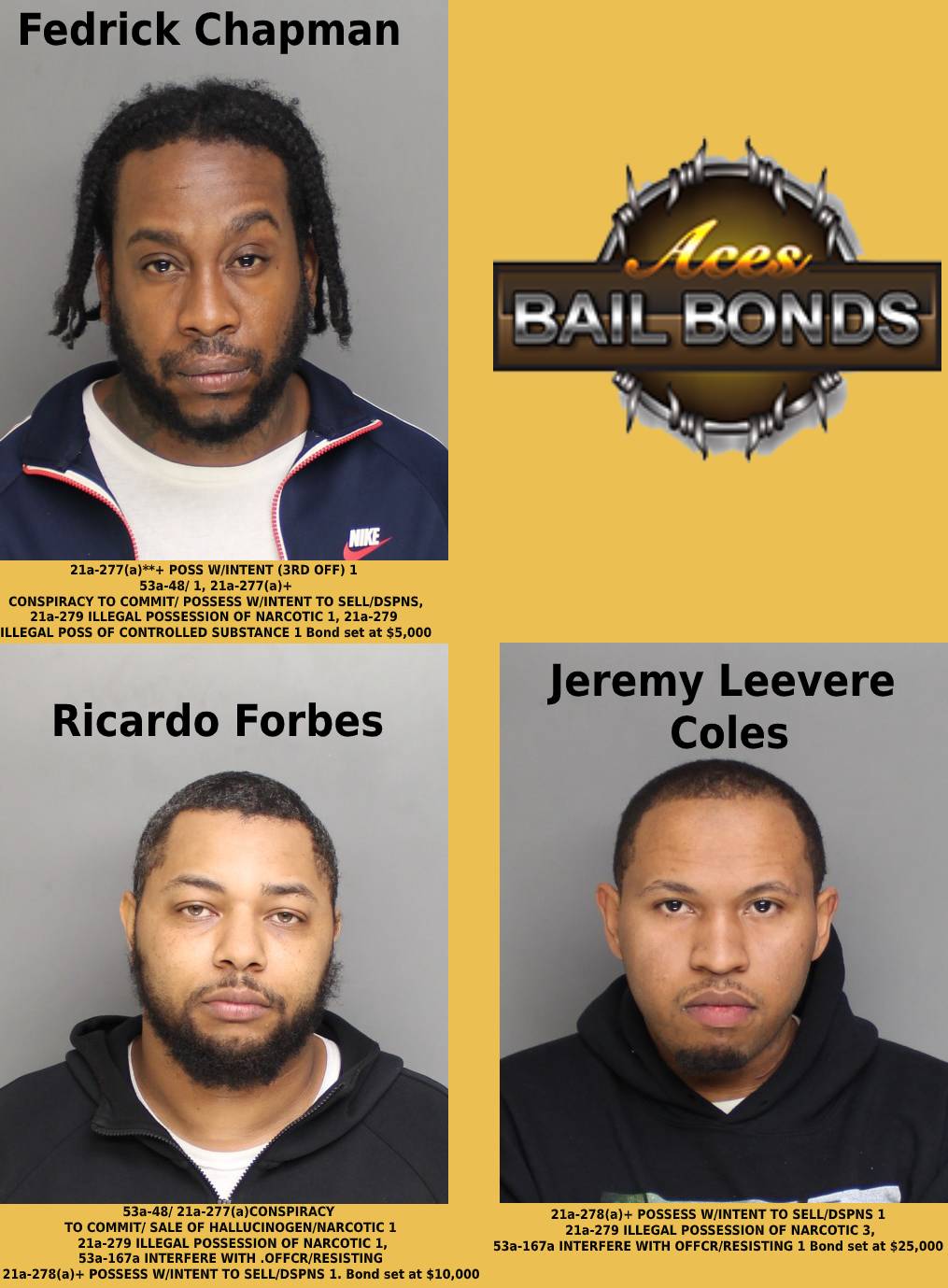
#Bridgeport CT  May 4, 2020 8:31PM, Numerous officers responded to 354 Coleman Street and Benham Avenue on quality of life issues complaint involving a large group of individuals loitering, drinking alcohol and playing loud music. The large groups of individuals were actively resistant and uncooperative with officers at the time of arrival. Officers soon found themselves involved in a physical altercation with at least one individual not adhering to the officers instructions. Additional officers as well as a K-9 were requested to respond to the scene from other sectors of the city due to the situation. The incident subsequently resulted in two officers being transported to Saint Vincent Medical Center for minor injuries. The following resulted from this incident, three arrests, two vehicles towed, seizure of 9 OxyContin Pills, 90 folds of Heroine, 36.3 grams of Crack cocaine, and $2,775.00 in cash

Bridgeport News: Two arrested in shots fired incident

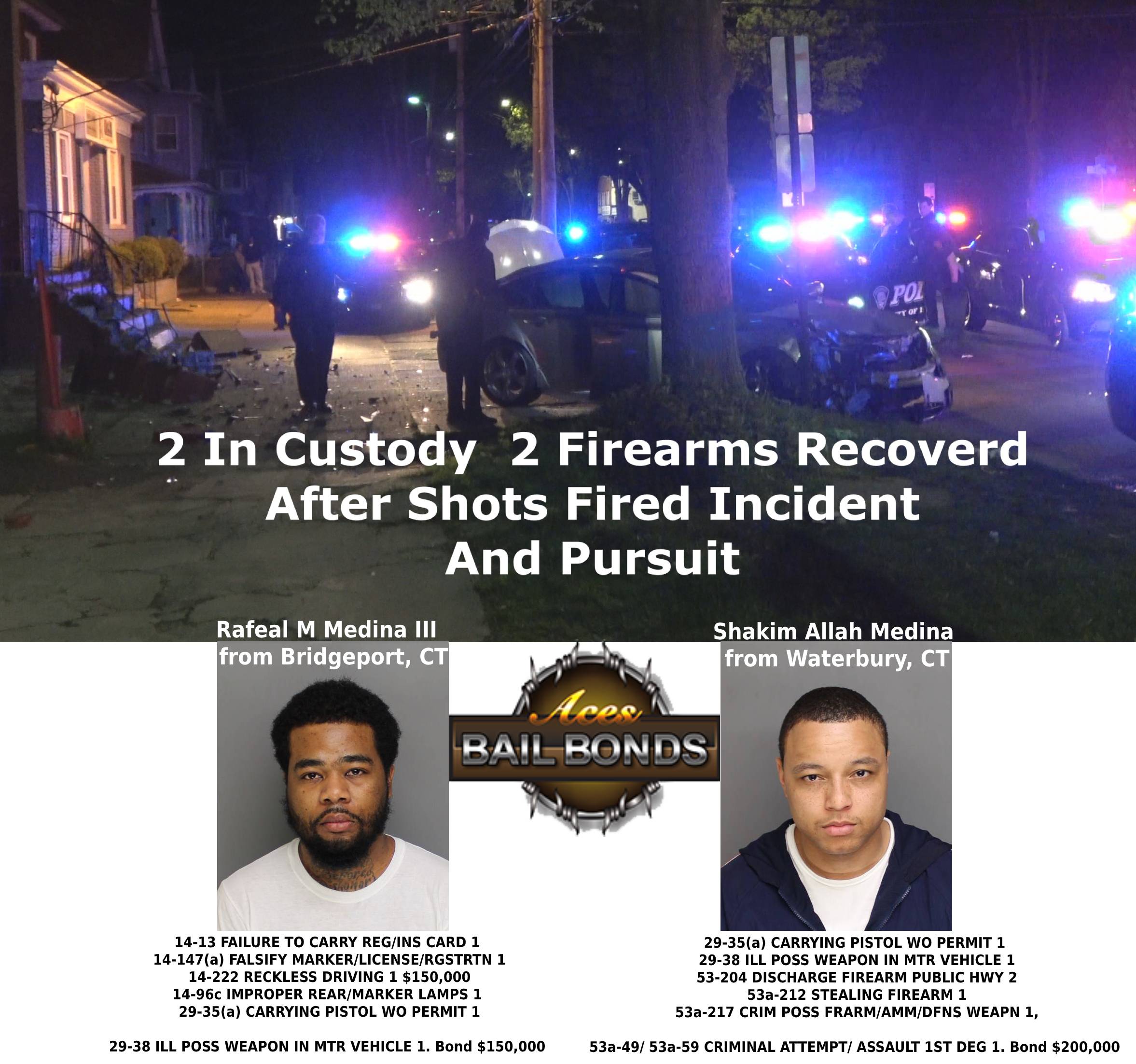
#Bridgeport CT — On May 3, 2020 at approximately 11:30 PM, Sunday night, a Bridgeport Police Officer while patrolling the area of Madison Avenue and North Avenue heard numerous shots fired and proceeded to canvass the area. During his canvassing of the area he proceeded to witness a vehicle with its back tail lights off cross in front of his vehicle. The officer radioed into the Bridgeport ECC to run the plate of the vehicle that came back as a misuse and conducted a motor vehicle stop. While the vehicle was stopped and the officer was waiting for backup to arrive before approaching, the vehicle sped off. A pursuit occurred and the vehicle was observed by officers disobeying stop signs and other traffic signals while attempting to avoid the police. The vehicle, while attempting to turn into a parking lot crashed onto the sidewalk. The officer blocked the exit of the driver side (later identified as Rafeal M Medina III ) and proceeded to attempt an arrest. At this time the officer observed a silver handgun in the passenger’s possession as a shot was fired through the front windshield. Responding Police Officers we able to apprehend both suspects without incident who were later identified as Rafeal M Medina III (driver) and Shakim Allah Medina (passenger). On-scene Police Officers found two handguns in the motor vehicle along with shell casings. Shell casings were also found during the police investigation of the area (Grand St and Hurd Ave) where the original shots fired were heard by the patrolling officer


.

Exit mobile version