


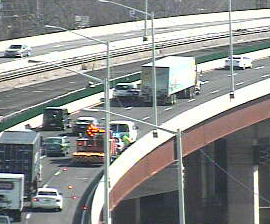
9:42am–#Stratford CT #cttraffic–I-95 northbound a crash in the right lane on the Moses Wheeler Bridge. Police are also investigating a possible second crash closer to the on ramp near BJ’s Wholesale Club.
Month: April 2014


Tonight’s Car Fire
1:28am–#Bridgeport CT–Tonight’s car fire is at 60 Berkshire Avenue.
Bridgeport News: Roof Collspse on Brooks Street
9; 31pm– #Bridgeport– Partial roof collapse at 583 Brooks Street
Fairfield News: Power Outage
Fairfield — A transformer has exploded at the corner of Black Rock Road and Jennings Road blacking out a large area of town. We are running on battery power st this time.

Monroe News: Fire Ravages Monroe Home
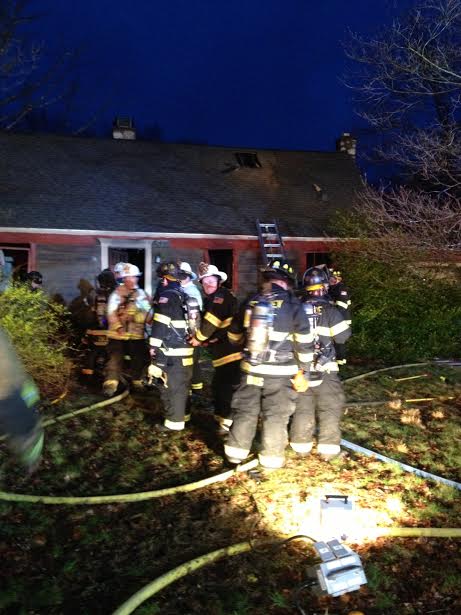
8:30pm–#Monroe CT– A fire has left an Elm St. home uninhabitable and killed two cats Tuesday evening. The residents were not home when a passing driver spotted heavy smoke coming from 551 Elm St. around 7:10 pm. Once volunteer firefighters arrived on scene shortly thereafter, heavy flames were pouring out of the living room windows of the cape cod-style home. Six engines, two ladder trucks and a rescue truck staffed by approximately 40 volunteer firefighters from the Monroe, Stepney, and Stevenson fire departments extinguished the fire under the direction of Stepney Deputy Fire Chief Scott Rose Sr. It took crews about 45 minutes to fully extinguish the fire. While two cats perished in the blaze, firefighters were able to safely remove a small dog.
There were no injuries to firefighters. The Monroe Fire Marshal’s Office is investigating the cause of the blaze. Per Fire Marshal Bill Davin, the house sustained very heavy damage and cannot be occupied. The Shelton, Trumbull, and Oxford volunteer fire departments staffed firehouses in Monroe while crews operated at the Elm St. incident until around 9:30 pm.
GOV. MALLOY: 5-YEAR TRANSPORTATION CAPITAL INFRASTRUCTURE PLAN WILL CONTINUE INVESTMENTS TO STRENGTHEN AND UPGRADE STATE BRIDGES, HIGHWAYS AND RAIL SYSTEMS AND CREATE THOUSANDS OF JOBS
(WATERBURY, CT) – Governor Dannel P. Malloy, joined by U.S. Senator Richard Blumenthal, U.S. Senator Chris Murphy, U.S. Representative Elizabeth Esty (CT-5)., Mayor Neil O’Leary, state Department of Transportation (ConnDOT) Commissioner James P. Redeker, state lawmakers, representatives from the Connecticut Business and Industry Association (CBIA), and members of the state building trades, today announced several of the state’s investments in major highway, bridge and rail projects as part of ConnDOT’s 2014-2018 Transportation Capital Infrastructure Program. The Governor made the announcement at the site of one of the Capital Program’s major projects, the widening of the I-84 corridor in Waterbury, which is set to begin construction this year.
“We have invested millions in our roads, bridges and railways over the last three years and have an ambitious five-year plan in place to continue upgrading and strengthening our transportation infrastructure well into the future,” said Governor Malloy. “These projects will facilitate commerce, stimulate economic development, improve the daily commutes of countless residents and create thousands of immediate construction jobs.”
Earlier this year, Governor Malloy proposed a state transportation budget for 2015 that represents a 165 percent increase in funding compared to 2010 levels and includes about $1.4 billion to fund the largest transportation capital program in Connecticut’s history. The Governor’s 2015 transportation budget also restores the dedication of the State Transportation Fund solely for transportation purposes. The Governor also noted that his budget – now being considered by the General Assembly – calls for the hiring of 75 ConnDOT engineers to move projects through the design and bid process more quickly.
“Investment in infrastructure create a positive flow of goods, services and job creation – the result is a positive impact on Connecticut and its citizens,” said David Roche, President of the Connecticut State Building Trades. “Our workers look forward to doing their part to upgrading and rebuilding our highways, roads and bridges for a better Connecticut.”
“A modern and efficient transportation infrastructure has long been cited as one of the key components of a competitive business climate,” said John R. Rathgeber, president and chief executive officer of the Connecticut Business and Industry Association. “As Connecticut strives to be one of the best states to do business, these investments are critical to accessing regional, national and global markets.”
“As the investments that have already been made by Governor Malloy come on line, people are returning to work and this is the time to step-up the momentum and take the construction industry’s ability to drive jobs and economic activity to scale,” said Don Shubert, President of the Connecticut Construction Industries Association. “These projects not only provide local jobs, but once the improvements are in place, all of the benefits go to Connecticut residents. These much needed transportation improvements provide opportunities, change lives, and build stronger communities.”
ConnDOT anticipates the availability of approximately $1.8 billion in the total Capital Program funding in Federal Fiscal Year 2014 for all transportation modes. This amount includes approximately $345 million for bus and rail assets and $1.4 billion available for highway and bridge infrastructure. In its 2013 Capital Program, ConnDOT committed approximately $1.6 billion for all transportation modes – road and bridge, railroad and bus and other public transit. The 2.7-mile I-84 widening project will add a third lane in each direction through Waterbury and is one of dozens of projects in ConnDOT’s five-year capital plan. Other major projects include:
- Replacement of the I-84 Hartford viaduct
- Q Bridge replacement (I-95 New Haven)
- Moses Wheeler Bridge replacement (I-95 Stratford)
- Putnam Bridge rehabilitation (Route 3 Glastonbury)
- Rehabilitation of Merritt Parkway in Stamford
- Operational improvements on I-95 in Norwalk
“Jobs and economic growth depend on safe and reliable roads, bridges and railroads– and all transportation– requiring sound, sustained investment,” said Senator Blumenthal. “I applaud the state for this wise and substantial investment. As chair of the Surface Transportation subcommittee, I will continue to fight to ensure that federal transportation investment keeps up with our state’s needs and priorities, particularly with regards to our commuter rail system, which has gone far too long without sorely needed safety upgrades and investments.”
“Our roads, rails, and bridges are the critical arteries we use every hour of every day to move people and goods around our state,” said Senator Murphy. “These investments create jobs now and are crucial to the long-term strength of our economy — I applaud Governor Malloy for making them.”
“Investment in our transportation infrastructure is critical for long-term economic growth and our state’s competitiveness,” said Congresswoman Esty. “As a member of the U.S. House Transportation and Infrastructure Committee, I’ve been working to increase investments to improve our aging roads, bridges, and railroads. The widening of the I-84 corridor, as well as the other construction projects funded through the Capital Program, will reduce traffic on our roads, increase productivity for local businesses, and put people back to work.”
“Governor Malloy has once again stepped up to address issues that are so critical to Waterbury’s future,” said Mayor Neil O’Leary. “This project ultimately will reduce traffic congestion on the highway, making access into and out of Waterbury easier than ever. As the city continues attracting new manufacturing businesses, efficient transportation will be vital.”
DOT Commissioner James P. Redeker said that in addition to highway and bridge improvements, the capital plan calls for millions more in investments in the New Haven commuter rail line – the busiest in the country – and the New Haven-Hartford-Springfield rail corridor, which will offer enhanced intercity passenger service beginning in 2016. The state invested $10 million to upgrade the power supply for the New Haven Line, which was successfully completed in February, giving full back-up power redundancy for the east- and westbound lines.
Last week, Governor Malloy announced that Connecticut has applied for $600 million in federal transportation funding to help cover the capital costs of three resiliency, or “hardening,” projects central to the Metro-North’s commuter rail infrastructure.
Street Fight Leads to Five Arrests
(Bridgeport, CT – April 14, 2014) – Five people face charges after a street fight Saturday on Taft Avenue.
Police Officer Juan Esquilin was sent to 146 Taft Ave. at 9:30 p.m. for a street fight.
He was told by a witness that two cars pulled up and about 10 people got out and started to fight with her boyfriend and other people on Taft Avenue.
He also spoke with Marcos Dasilva, 24, who stated that he was struck by a car driven by Sean McNamara, 20.
Witnesses stated that Dasilva was knocked to the ground during the fight, got up and threw a can of beer at McNamara’s vehicle as it drove away, smashing its rear window. McNamara then backed up and struck Dasilva.
That incident was still under investigation when police responded to a report of someone shooting a house at 375 Silver Lane. It was later determined that McNamara lives there. Police were on scene when McNamara drove up.
Police ultimately arrested five people. Cassandra Narvarez, 20, of Stratford, and Marlene Rodriguez, 22, of Bridgeport, were arrested for fighting each other. They were issued summons and given court dates.
Dasilva also was issued a misdemeanor summons for third-0degree assault, breach of peace and criminal mischief.
McNamara and Jimmy Josue Avila, 19, both of Bridgeport, were booked and had bond set at $2,500 each.
Avila was charged with third-degree assault, breach of peace and two counts of threatening. McNamara faces two counts of second-degree assault and breach of peace.
Both sides accused the other of provoking the fight.

McNamara


Batten Down The Hatches
11:54am–#Fairfield CT–A woman in a white jeep called police that the fencing surrounding the dumpsters at Bob’s Stores on the Post Road swung open by the gusty winds, hit her jeep and dislodging the driver’s side fender.
Detectives Obtain Arrest Warrant for Suspect in Groping Case
(Bridgeport, CT – April 14, 2014) — Detectives have secured an arrest warrant charging a city man with approaching and groping two high school students on separate occasions in the East Side.
Detectives Martin Heanue and Jorge Cintron secured the warrant on Thursday charging Harry Rodriguez, 40, of Hallet Street. He currently is jailed on unrelated charges. The warrant charges him with two counts of fourth-degree sexual assault, unlawful restraint and two counts each of risk of injury to a minor and breach of peace. He will be served with the warrant in Superior Court.
The warrant stems from an investigation started after a report of six incidents in March where a male approached females, improperly touched them and then ran off. Rodriguez has been charged in connection with two of those incidents, and the investigation remains ongoing. Based on descriptions by the victims, the same person is believed to be responsible for all six. Additional charges are possible.
“This case was a priority and Detectives Heanue and Cintron did an outstanding job in linking Rodriguez to two of the incidents,” said Capt. James Viadero, the head of the detective division. “The suspect showed no signs of stopping. Only when police locked him up did the incidents stop.”
School Police Officer John Forestier and other school resource officers also provided key assistance, Viadero said.
“The most important thing is keeping our kids safe,” said Mayor Bill Finch. “Great work by detectives and SROs did exactly that.”
The victims ranged in age from their early to late teens.
The initial incident happened on March 20 near Harding High School. That victim, 18, described being grabbed by a thin male who ran away and fled in a grayish-colored Buick. Rodriguez also was charged with a March 27 incident in which a 14-year-old was accosted on East Main Street at Arctic Street while she waited for a bus. She provided a similar description.
Heanue and other detectives canvassed the area and checked for any video that might help identify a suspect or vehicle. Heanue located video from multiple locations from the morning of March 27 that showed a gray Buick in the immediate area of East Main and Arctic before and after the incident. Heanue on video also saw a male matching the description of the assailant walking in the area and running away a few minutes later.
On March 31, Lt. Paul Grech located a silver Buick parked on Maple Street near Hallet Street. The car matched the description of the car believed to be used by the assailant with the exception that it had tinted windows.
When detectives went to the address to which the car was registered, they spoke with Rodriguez. He stated he had the windows tinted a few days before.
Later in the conversation, he stated “if this is about the kids being touched at the bus stops there is another gray car just like this one with tinted windows going around the East Side doing stuff like that.”
Later, police showed photographs of the car to Rodriguez’s wife. The photos were from video taken just before and after the March 27 incident. She identified the car as hers and said her husband was the only other one with keys.
She then consented to let police search her house and detectives recovered a hooded sweatshirt with a half-face ski mask similar to what was described by several of the victims. Inside the Buick, police recovered a second ski mask.
The warrant carries a bond of $250,000.
Rodriguez was arrested on April 2 and has been jailed since on a violation of parole.
GOV. MALLOY RELEASES CONNECTICUT’S CYBERSECURITY STRATEGY
(HARTFORD, CT) – Governor Dannel P. Malloy today released a cybersecurity plan for Connecticut’s utilities to help strengthen defense against possible future threats, such as a cyberattack. Connecticut is the first state to present a cybersecurity strategy in partnership with the utilities, and will share it with other states working on similar plans.
Governor Malloy initiated the report as part of his 2013 Comprehensive Energy Strategy, which called on the state Public Utilities Regulatory Authority (PURA) to work with state agencies and conduct a review of Connecticut’s electricity, natural gas, and major water companies to assess the adequacy of their capabilities to deter interruption of service and recommend actions strengthening deterrence.
“Fulfilling the promise of a more reliable energy future requires us to look beyond the foreseeable weather threats we know well in Connecticut to defend against possible future threats, such as a cyberattack on our public utilities,” said Governor Malloy, who released the report at a news conference in the state Emergency Operations Center in Hartford. “Unfortunately, we need to do all we reasonably can to prevent, deter, detect and – if necessary – respond to a cyberattack. Just as we are taking proactive steps to harden our critical infrastructure and the shoreline to defend against severe weather events, so too must we be prepared to defend against the potential disruption that cyber intrusions can cause to vital services such as energy, water, and telecommunications.”
The Governor was joined at the news conference by PURA Chairman Arthur House, who authored the strategic plan, as well as representatives from the state’s major utilities.
Chairman House, who previously worked in the U.S. intelligence community, noted that “attempts to disrupt public utility services are growing in frequency, scale and sophistication.” He welcomed commissioning the report and said that with the Governor’s leadership and support from the General Assembly, it will be the first step in making cybersecurity part of Connecticut’s efforts to increase the resilience and reliability of public utility service.
Among other findings, the report recommends that Connecticut commence self-regulated cyber audits and reports, and move toward a third-party audit and assessment system. The report also makes recommendations regarding local and regional regulatory roles, emergency drills and training, coordinating with emergency management officials, and handling confidential information.
Governor Malloy noted that Connecticut is actively cooperating with federal authorities to strengthen cybersecurity and will make this report available to other states. “Everyone in America is vulnerable to cyber disruption,” he said. “We need to work together at the federal, state and local levels and with the utilities themselves to do all we can to defend against serious and dangerous threats to our safety and wellbeing.”
The Governor commended PURA, Northeast Utilities and United Illuminating, Connecticut’s municipal electric companies and two major water companies, Aquarion and Connecticut Water, along with the telecommunications industry for working together to produce the strategic plan.
He directed PURA to begin the process of fleshing out and proposing concrete actions to respond to the questions this report raises. He further directed PURA to plan and lead a series of technical meetings with the public utilities to seek consensus on the establishment of security standards, reporting of compliance and a process to manage cybersecurity compliance oversight.
“Connecticut’s families and businesses depend upon reliable utility service for their wellbeing and their livelihood. Whether a threat comes from severe weather or a cyber-attack, we need to be prepared for emergencies so that outages can be avoided and service restored as quickly as possible,” said State Senator Bob Duff (D-Norwalk), Senate Chair of the Energy and Technology Committee. “A couple of years ago, we learned the hard way that our electric infrastructure was not prepared for a major storm, and we have made significant improvements in the time since. I applaud Governor Malloy for now looking ahead to prepare for a very different, but perhaps even greater threat.”
“Once again, Connecticut demonstrates national leadership by taking decisive action to protect our power and water supplies,” said State Representative Lonnie Reed (D-Branford), House Chair of the Energy and Technology Committee. “We have been deploying microgrids and other back-up systems to ensure that critical facilities such as hospitals, police and fire stations remain fully operational during emergencies. Launching a program to protect against cyberattacks is an essential next step.”