2002-04-13@2:18pm–#Fairfield CT– A man entered the Cumberland Farms, relieved himself on the floor and left in a black sedan towards Fairfield Beach.
This news report is made possible by:

2002-04-13@2:18pm–#Fairfield CT– A man entered the Cumberland Farms, relieved himself on the floor and left in a black sedan towards Fairfield Beach.
This news report is made possible by:
2020-04-13@2:09pm–#Fairfield CT–#Southport CT– A tree has crashed into a home on Village Lane.

2020-04-13@10:19am–A tree has fallen and blocked the roadway at Deacon and Central Avenue.
This news report is made possible by:

2020-04-13@10:00am–#Bridgeport CT– Police are investigating a warehouse break-in on Wilmont Avenue.
This news report is made possible by:

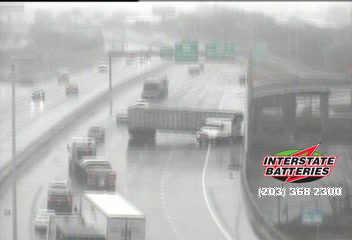
2020-04-13@10:14am–Bridgeport CT–#cttraffic– A jackknifed tractor-trailer on I-95 northbound near exit 29. Detour if you can.

WASHINGTON—U.S. Senator Chris Murphy (D-Conn.) joined a letter led by U.S. Senator Ron Wyden (D-Ore.), along with 17 colleagues, in calling on the Small Business Administration (SBA) to ensure small businesses receive Economic Injury Disaster Loans (EIDLs) associated with the COVID-19 crisis and the new Emergency Economic Injury Grants (EEIGs) within three days of application as mandated by Congress.
The senators’ letter to SBA Administrator Jovita Carranza follows reports that small businesses across the country are not receiving EEIG advances, despite the fact that they are eligible entities and have taken the necessary steps of applying for an EIDL and requesting an EEIG.
“Small businesses across the country are counting on this federally-mandated relief, and it is imperative that the SBA ensure they receive it efficiently and effectively,” the senators wrote. “Businesses are receiving conflicting guidance on the expected timing for receiving these critical funds, and many businesses cannot afford to wait as they try to keep their employees on payroll and pay their rent.”
The senators also asked the SBA to clarify whether small businesses who applied for an EIDL prior to March 27, 2020, when the CARES Act was signed into law, must now reapply in order to receive it and the EEIG, and if the SBA requires additional action or resources from Congress to be able to fully execute the small business relief provisions of the CARES Act.
The senators requested the SBA act quickly to provide clear and consistent guidance to small businesses and answer the following questions by April 16, 2020:
1. Do small businesses that applied for an EIDL prior to the date the CARES Act was signed into law have to reapply in order to receive it and the related EEIG?
a. If yes, please describe the steps that SBA is taking to notify all necessary applicants.
2. What is the time frame during which eligible applicants can expect to receive an EEIG and EIDL?
a. Will SBA notify all applicants that are not awarded funding, and how will that notification occur?
3. In the CARES Act, Congress included EEIGs to provide an emergency advance of up to $10,000 to small businesses and private non-profits harmed by COVID-19 within three days of applying for an EIDL. Can you confirm that eligible applicants may still receive up to $10,000 in EEIGs?
a. Is the SBA allocating these grants on a per-employee basis or is it otherwise distinguishing between businesses with greater or fewer employees?
b. What other criteria is the SBA applying in its calculation?
4. Does the SBA require additional action or resources from Congress to be able to fully execute the provisions of the CARES Act?
a. If yes, please describe the SBA’s needs.
Senators Murphy and Wyden were joined by U.S. Senators Chris Van Hollen (D-Md.), Tammy Duckworth (D-Ill.), Mazie Hirono (D-Hawaii), Bernie Sanders (I-Vt.), Dianne Feinstein (D-Calif.), Jack Reed (D-R.I.), Catherine Cortez Masto (D-Nev.), Sheldon Whitehouse (D-R.I.), Tina Smith (D-Minn.), Ed Markey (D-Mass.), Jacky Rosen (D-Nev.), Jeff Merkley (D-Ore.), Brian Schatz (D-Hawaii), Tammy Baldwin (D-Wisc.), Tim Kaine (D-Va.), Amy Klobuchar (D-Minn.), and Doug Jones (D-Ala).
A full copy of the letter can be found here
This press release was made possible by:

2020-04-13@6:06am–#Trumbull CT–#cttraffic–Report of a rollover crash on the Merritt Parkway, northbound between 49 and 52.
This news report is made possible by:

HARTFORD, CT) – Governor Ned Lamont today announced he has signed an executive order that enacts a series of protections for residential renters struggling to pay their housing costs during the COVID-19 emergency, ensuring that they will not be evicted during this nationwide crisis and receive grace periods over the next several months. The order also extends all previously enacted closures, distancing, and safety measures – including for schools, restaurants, bars, retail stores, gyms, and other establishments – through at least May 20, 2020. In addition, it permits food trucks to operate at certain highway rest areas, and also modifies educator certification testing.
Protections granted to residential renters during COVID-19 crisis
Governor Lamont’s order – Executive Order No. 7X
– includes a provision taking the following actions to protect residential renters during the public health crisis:
· All landlords are prohibited from issuing a notice to quit or beginning eviction proceedings before July 1, 2020, except for serious nuisance, such as physically harming another tenant or the landlord.
· For rent due in April 2020, landlords must grant tenants an automatic, 60-day grace period for payment, instead of the existing 9-day grace period.
· For rent due in May 2020, landlords must grant a 60-day grace period for payment upon the request of tenants. Under this provision, a tenant must notify the landlord that they have lost a job, lost hours, or otherwise lost revenue or faced significantly increased expenses as a result of the COVID-19 pandemic.
· If a tenant has a paid security deposit of more than one month’s rent, the tenant can apply all or part of that excess to April, May, or June rent. Under this provision, the tenant must notify the landlord that they have lost a job, lost hours, or otherwise lost revenue or faced significantly increased expenses as a result of the COVID-19 pandemic.
“During this crisis, these protections will allow residents to stay safe at home while prohibiting landlords from charging late fees or interest for nonpayment and provide a buffer for the next couple of months,” Governor Lamont said. “Residential renters need to have added safeguards during times of emergency like this – they have rights and we will see to it that they are protected.”
Last week, Governor Lamont announced
that his administration reached an agreement with over 50 credit unions and banks in Connecticut to offer mortgage relief to homeowners during the COVID-19 pandemic, and in Executive Order No. 7S
, provided temporary relief regarding upcoming municipal tax payments. Homeowners should contact their lender to discuss accessing mortgage forbearance.
Extension of all previously enacted closures, distancing, and safety measures through May 20
Also under today’s executive order, the deadlines for all closure, distancing, and safety measures enacted to mitigate the spread of COVID-19 that are contained within previously enacted executive orders are extended through at least May 20. This applies to the following provisions:
· Executive Order No. 7D, Section 2, imposing limits on restaurant, bar, and private club operations
· Executive Order No. 7D, Section 3, closing on-site operations at off-track betting facilities
· Executive Order No. 7D, Section 4, closing operations at gyms, sports, fitness, and recreation facilities and movie theaters
· Executive Order No. 7F, Section 1, closing large shopping malls
· Executive Order No. 7F, Section 2, closing places of public amusement
· Executive Order No. 7H, Section 1, imposing safety and distancing measures for workplaces and non-essential businesses
· Executive Order No. 7N, Section 1, prohibiting social and recreational gatherings of more than five people
· Executive Order No. 7N, Section 3, restricting retail operations
Food trucks permitted to operate at certain rest areas to provide meals to truck drivers and other essential workers
In addition, today’s executive order lifts restrictions on commercial activity in Connecticut highway rest areas and permits food trucks to set up in these locations with the goal of feeding hungry truckers and other essential workers during the pandemic. The directive comes in the wake of recently rescinded federal prohibitions against the commercialization of rest areas nationwide, freeing the states to provide additional necessities.
Governor Lamont reiterated his directive that everyone should “Stay Safe, Stay Home” and restrict themselves to essential travel only. Truck drivers, he said, have no choice but to be out on the road making critical deliveries and pick-ups.
“These truck drivers are keeping Connecticut moving and are providing critical necessities to our state during this national crisis,” Governor Lamont said. “We need to make it as easy as possible to keep them fed around the clock.”
The Connecticut Department of Transportation (CTDOT) maintains seven rest areas on Interstates 84, 91, and 95. They are open 24/7, year round. They have food and beverage vending machines and restrooms, but no other travel services. They are distinct from the service plazas on I-95, 91, 395, and Route 15, which have gasoline, restaurants, convenience stores, and other amenities. The rest areas accepting food trucks are located in Danbury on I-84; Wallingford and Middletown on I-91; and North Stonington on I-95.
Food truck operators interested in participating will need receive approval from CTDOT by filling out a permit application and emailing it to CTDOTCOVID@ct.gov. Operators must have a state-issued Department of Public Health permit to prepare and serve food. Spaces for the food trucks will be marked off at each of the rest areas, and signage will be included strongly encouraging social distancing.
Modifications made to educator certification testing
Finally, today’s executive order also modifies state statutes to authorize the commissioner of the Department of Education to temporarily defer any requirements regarding certification testing for educators as he deems necessary to address the impact of COVID-19 risks.
**Download: Governor Lamont’s Executive Order No. 7X
This press release is made possible by:

Police UPDATE:
On April 13, 2020 at approximately 2:07 am, Bridgeport Patrol Officers responded to a serious motor vehicle crash on Barnum Avenue between Helen Street and Central Avenue.
This was a single-car motor vehicle accident involving a 24-year-old Bridgeport man operating a gray 2005 Chrysler Pacifica van. There were no other passengers in the vehicle.
The vehicle was traveling eastbound on Barnum Avenue when it crossed over into the westbound lane and struck the abandoned Remington Arms Munitions Factory located at 939 Barnum Avenue. The vehicle came to a stop in the westbound lane of Barnum Avenue; sustaining heavy front end damage.
Bridgeport Fire Department responded and extricated the driver from the vehicle. The driver was transported to Bridgeport Hospital by AMR Ambulance and is listed in critical condition.
The Bridgeport Police Department Crash Reconstruction Team has responded to conduct further investigation. Anyone with additional information, related to this crash, is asked to contact the Bridgeport Police Department’s Traffic Division (Officer Aaron Rivera) at 203-576-7640.
2020-04-13@2:10am–#Bridgeport CT– One person was unconscious and trapped inside their vehicle at a crash at Barnum and Helen Street. Firefighters were called to extricate. The driver of the other vehicle fled the scene on foot.