737 Investigation

WASHINGTON, D.C.] – U.S. Senator Richard Blumenthal (D-CT), a member of the Senate Committee on Commerce, Science, and Transportation, released the following statement after the U.S. Department of Transportation (DOT) Office of Inspector General issued its first report on the Boeing 737 MAX development and certification:

“The Inspector General’s report makes crystal clear that the 737 MAX plane crashes were the direct result of a pattern of Boeing’s deliberate concealment. The crewmembers and loved ones lost in these crashes never had a chance because Boeing decided to conceal MCAS from pilots and federal regulators. The report lays bare the company’s reprehensible actions and the Federal Aviation Administration’s deficient oversight. It is long past due for Boeing to be held accountable – and for the FAA to improve its certification process. As the FAA begins certification flights to unground the 737 MAX, I will continue to fight for justice for the victims and to ensure the aircraft is kept out of the sky until it is found completely safe for the traveling public.” 


This press release is made possible by:


Fairfield Police Warn You To Lock Your Car Doors!

FAIRFIELD — Chief Christopher Lyddy and the Fairfield Police Department would like to advise residents to properly secure their vehicles to prevent break-ins and avoid being easy targets for thieves this season.
The summer season is most popular for vehicle thefts and break-ins, and July is recognized by the National Highway Traffic Safety Administration (NHTSA)

as National Vehicle Theft Prevention Month. According to the NHTSA, each year over 770,000 vehicles are stolen and 40.9% are never recovered.

Additionally, the NHTSA warns that vehicle parts and valuable items left in vehicles are also targets for thieves. Parts that may be targeted include radios, wheel covers, doors, engines, transmissions, air bags and radios, as well as items such as GPS units, cellphones, iPads, laptops and purses.
“As the temperature rises, so does the number of vehicle break-ins and thefts across the country,” Chief Lyddy said. “We encourage residents to follow these tips in order to protect their vehicle and other valuable possessions this summer.”
The NHTSA and Fairfield Police remind vehicle owners to use common sense when parking and exiting your vehicle.
  • Take your keys. Don’t leave them in your vehicle.
  • Close all windows and lock all doors.
  • Never leave valuables in your vehicle. Anything stored inside your vehicle should be out of sight or in the trunk.
  • Never leave credit cards/debit cards, cash or your wallet or purse inside of your vehicle overnight.
  • Park in well-lit areas or preferably inside a garage, if possible. Park in visible areas where your vehicle is not hidden by foliage or larger vehicles. Install lights with motion sensors near where you park your vehicle.
  • Get in the routine of double-checking that your vehicle is locked and secure each night around 9 p.m. This is known as the 9 p.m. Routine.
If your vehicle has been stolen or broken into, follow these steps:
  • Call the police to report a theft or break-in. A copy of the police report and/or a case number will be needed to provide to your insurance company.
  • You may be asked to provide the license plate number, make, model and color of the car, the VIN number and any identifying characteristics.
  • Contact your insurance company to file a claim within 24 hours of when you discovered your vehicle was stolen or broken into.
  • If you find your vehicle before authorities, contact the police immediately and then your insurance company.

This press release is made possible by:


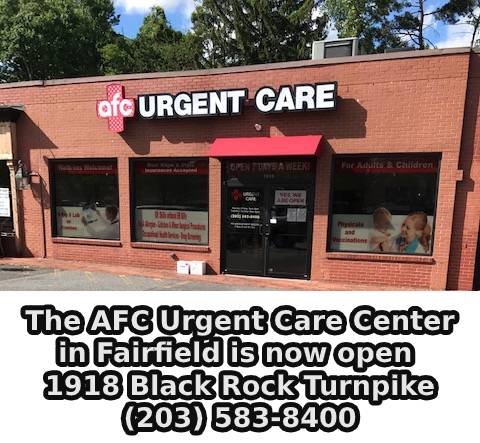
Visit Fairfield AFC Urgent Care at:
https://www.afcurgentcarefairfield.com/

Fairfield News: Tree Of Hope Is Back

2020-07-01 #Fairfield CT— I don’t normally to investigative reports but many of you reached out to me to find out why the Tree Of Hope was taken down at Sherman Green, but mainly WHO caused it to come down.   Many sources pointed to Representative Town Meeting Member (RTM) Dru Mercer Geoprgoados of the 9th district.  I spoke with Dru on the phone to get her side of the story.  She said I can quote her that the person who complained to her was former First Selectman Sherri Steeneck (First Selectman for 40 days after Ken Flatto stepped down).


Briefly, the tree was approved in 2019 and not re-applied for 2020.  The lights on the tree are required to be turned off on January 15th.  The plaque, banners (red white and blue but not flags), and the cornhole game were not approved by the Parks and Recreation Commission.


Today, First Selectwoman Brenda Kupchick released this statement:


Town residents have voiced their concerns via email and social media over a Facebook post shared yesterday by Al DiGuido of Saugatuck Sweets regarding banners and lighting of a tree at Sherman Green.


First Selectwoman Brenda Kupchick said, “I want to lay out the facts so residents understand what transpired and confirm my support for the charitable work and generosity of Mr. DiGuido and our community and for the American Flag being flown in our town.”


The Town has procedures in place for any business or individual who wishes to plant a tree, hang a sign or flag, or display any item on Town property. This policy includes going through the Park & Recreation Commission for approval.


“It’s critical there is a clear and fair process to vet requests to display anything on town property. In the instance of the Tree of Hope, Mr. DiGuido generously donated the tree to the Town, and did so through the town’s long-standing process. The tree of Hope will remain on the green and I encourage Mr. DiGuido to make another request to the Park and Rec Commission to keep the lights on longer,” said Mrs. Kupchick.


The Parks and Recreation Commission approved the Tree of Hope in October 2019 for the Sherman Green with an agreement the tree would be lit from November through January 15, 2020.

In early March, Park & Recreation Director, Anthony Calabrese, spoke to Mr. DiGuido during the pandemic about adding patriotic flags on the green and maintaining the lights through July 1st in an effort to lift the spirits of our community and give hope during a very challenging time for our town.


This decision was made unilaterally without commission approval, as the commission was not meeting during this time of emergency. There have been many instances in which the director makes similar decisions in between meetings. This was a decision the First Selectwoman fully supported. Last week, a member of the RTM wrote to town officials to express concerns about the proper protocols not followed in light of the pandemic and asked for the flags and lights be removed in accordance with the agreement. The flags and lights were removed yesterday by Mr. DiGuido.


“Last night I asked our Fire and Police to gather as many American flags as we could find so together we could line downtown Fairfield with flags to celebrate the 4th of July. I look forward to putting American flags up downtown today and celebrating America’s Independence throughout the weekend,” said First Selectwoman Kupchick.


Senators Want Increased Funding For Children With Disabilities

WASHINGTON—U.S. Senator Chris Murphy (D-Conn.)U.S. Senator Maggie Hassan (D-N.H.), both members of the U.S. Senate Health, Education, Labor and Pensions Committee, and U.S. Senator Chris Van Hollen (D-Md.) on Tuesday introduced legislation that would increase funding for children with disabilities. The Supporting Children with Disabilities During COVID-19 Act appropriates $11 billion for state grants under the Individuals with Disabilities Education Act (IDEA), $1.2 billion for early childhood education programs, $55 million under the Assistive Technology Act of 1998, and requires recipients of funds to report to Congress how this money is spent.


“COVID-19 has wreaked havoc on our education system—forcing millions of Americans into distance learning. This has been uniquely challenging and harmful for students with disabilities. Now is not the time to backtrack on our commitment to provide a quality education to all; instead, we must strengthen that commitment when students and their families need it most. That’s why we are introducing legislation that provides additional funding to schools to ensure our educators have the resources they need to continue compliance with federal disability education laws despite the circumstances. We must get this legislation included in the next stimulus package Congress considers so children with disabilities have every opportunity to get back and stay on track with their education,” said Murphy.
 

“Students who experience disabilities have always been among the most vulnerable in our education system, but now with the COVID-19 pandemic disrupting our system of learning, the risk of these students falling behind is even greater. This legislation will help support educators who are doing everything they can so that students with disabilities receive the same educational opportunities as their peers, and I urge my colleagues on both sides of the aisle to include this important legislation in the next COVID-19 relief package,” said Hassan. 


“For too long Congress has not held up its end of the bargain in providing full funding to ensure a quality education for all students with disabilities. COVID-19 has only exacerbated school funding shortages across the country, and will make this gap even more severe. We must provide the resources to fully fund IDEA long-term, and we must act now to provide for these immediate needs in response to COVID-19,” said Van Hollen.


Earlier this month, Murphy and Hassan published an op-ed with 74million on the importance of increasing funding for children with disabilities, especially during the COVID-19 pandemic. In April, Murphy also released bipartisan principles to support students with disabilities, calling for additional funding in the next COVID-19 stimulus package. Additionally, Senator Hassan led her colleagues, including Senators Murphy and Van Hollen, in calling for greater support for students who experience disabilities in upcoming COVID-19 response legislation.


This press release was made possible by:


Visit BMW of Bridgeport at: https://www.bmwofbridgeport.com/

ASSISTANCE FOR RENTERS, HOMEOWNERS, AND RESIDENTIAL LANDLORDS IMPACTED BY COVID-19 EMERGENCY

HARTFORD, CT) – Governor Lamont announced today a comprehensive plan to put more than $33 million in state and federal resources to work providing emergency assistance to renters, homeowners, and residential landlords impacted by the COVID-19 public health emergency.


Elements of this plan include:


  • $10 million rental assistance program for Connecticut residents impacted by COVID-19, administered through the Department of Housing, which will provide payments to landlords on behalf of approved tenant applicants, with a priority on lower-income households who have been denied unemployment insurance;
  • $5 million for eviction prevention to help renters who were in the process of eviction before the declaration of the COVID-19 public health emergency;
  • $10 million to provide mortgage relief to homeowners who have suffered impacts from COVID-19 and whose mortgages are not federally insured, administered by the Connecticut Housing Finance Authority (CHFA);
  • $4 million in rapid rehousing funds to help people pay costs like security deposits and initial rent to exit homelessness to housing, administered by the Department of Housing;
  • $2.5 million rental assistance program for those who are ineligible for emergency assistance through the federal CARES Act, including those who are undocumented, administered by the Department of Housing;
  • $1.8 million in funding for reentry and rehousing assistance for people exiting incarceration, administered by the Connecticut Coalition to End Homelessness;
  • Extending the residential eviction moratorium to August 25, bringing Connecticut’s measures in line with federal measures (the CARES Act prevents evictions from most properties until late summer); and
  • Extending the opportunity to apply a portion of any security deposit worth more than one month’s rent toward rental payments.


All housing assistance programs administered through the state and through CHFA will include housing counseling to help renters and homeowners problem solve and develop plans to pay housing costs going forward.


In addition to this assistance through the state, large Connecticut cities received $10 million under the CARES Act Emergency Solution Grants program to prevent homelessness and support homeless populations. The Connecticut Department of Housing is encouraging those municipalities to allocate some of that funding to provide rent arrearage assistance for low and very low-income families that are struggling to make ends meet.


Governor Lamont previously allowed and encouraged municipalities to provide homeowners a 90-day grace period on any property taxes due through July 1. His administration also partnered with local financial institutions to provide mortgagors financially impacted by COVID-19 more time to make their payments.


Governor Lamont said, “The COVID crisis has taken a toll on many Connecticut families. We know that some renters and homeowners are having a hard time paying the costs of their housing. It’s critical that we provide emergency help so that they can stay housed, and to support residential landlords, many of who are mom-and-pop small businesses themselves.”


Lt. Governor Susan Bysiewicz said, “During the COVID-19 public health emergency, housing hardships have reached unprecedented heights. Too many families across our state have had difficulty paying their rent or mortgage due to job loss or decreases in wages. We need to do all that we can to ensure families have the assistance they need to stay in their homes. By working with multiple partners to launch this emergency housing assistance package, we can help relieve some of the financial burden our families have faced during this pandemic.”


Housing Commissioner Seila Mosquera-Bruno said, “Housing stability is critical to the health and wellbeing of Connecticut residents, and COVID has had a significant impact on the ability of many of our families to pay the costs of their housing and maintain that stability. These initiatives, working in coordination with our partners across the housing industry, including legal services, developers, landlords, lenders and our social service providers, will provide a great opportunity to promote stability, and help our families to weather this epidemic.”


Nandini Natarajan, CEO of CHFA, said, “There are many low and moderate-income homeowners with mortgages not covered by CARES Act protections, who need some assistance to meet their mortgage payments. This emergency funding will provide vital assistance, helping them to remain in their homes as they work to regain their financial stability.”


Social Services Commissioner and Acting Public Health Commissioner Deidre Gifford said, “When people lose their housing, they may be forced to resort to living in doubled-up situations or to enter homeless shelters. Science is clear that denser housing conditions and less ability to socially distance mean a greater risk to these individuals and families, and to their communities, of catching and spreading the COVID virus. Helping Connecticut residents stay housed is an important part of our public health response.”


Kiley Gosselin, Executive Director of the Partnership for Strong Communities, said, “We welcome the governor’s action to extend the eviction moratorium and put in place this package of housing assistance. Housing is a necessity under any circumstances and helping the estimated 230,000 Connecticut renter households at risk of losing their housing to remain housed during this public health emergency is a particularly urgent issue.”


Cecil J. Thomas, an attorney at Greater Hartford Legal Aid, Inc., speaking on behalf of Connecticut’s three legal services programs (Connecticut Legal Services,  New Haven Legal Assistance Association, and Greater Hartford Legal Aid) said, “We are very pleased that the governor has ordered extension of the eviction moratorium in tandem with the introduction of these new programs to offer rental assistance to low-income tenants. In light of the enormity of the pandemic crisis for both landlords and tenants, we hope that the governor will take additional steps as the need arises.”


Richard Cho, CEO of the Connecticut Coalition to End Homelessness, said, “We’ve long known that a stable home is critical to success in reentry. We now know how critical it is to health and to life. We are grateful to the Connecticut state government for ensuring that vulnerable people are not discharged from prison to the streets during this public health emergency, but to a safe and stable home.”


For more information on the resources, please see the following websites:


Exit mobile version