2020-10-03@12:34am–#Bridgeport CT– Two ambulance were dispatched to this crash with injuries at Lexington and Linen Avenue.

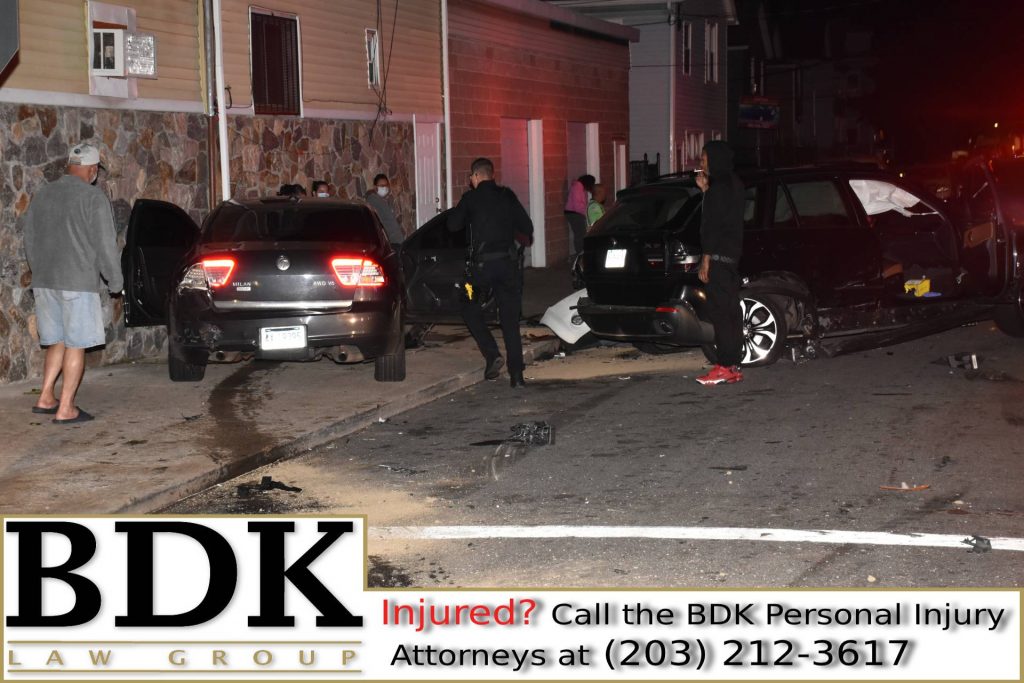
2020-10-03@12:34am–#Bridgeport CT– Two ambulance were dispatched to this crash with injuries at Lexington and Linen Avenue.
Police UPDATE:
On October 2, 2020 at 2003 hours, shots were fired inside 375 Pequonnock Street. This is the location of Quick Stop Barber Shop. A gunman entered the barbershop and fired at workers and patrons inside. A 39-year-old male employee was shot once in the arm and neck and fled from the establishment. Responding officers found this victim down the street and applied a tourniquet to his wound to stop severe bleeding. This victim was transported by medics to St. Vincent’s Medical Center where he was treated for a serious injury to his arm. This victim is expected to survive. A second male victim identified as Jamain Allen, 40, was found in the lot next to the barbershop. Allen was shot multiple times in the head and was pronounced dead at the scene.
Detectives are processing a crime scene at 375 Pequonnock Street and the public should expect road closures in the area for several hours as evidence is collected. Anyone with information about this crime should call Detective Cintron at 203-581-5227, or citizens can also call the Bridgeport Police Tips Line at 203-576-TIPS. All information will remain confidential.
2020-10-02@8:07pm–#Bridgeport CT– Two people were shot in the 300 block of Pequonnick Street. One man was struck in the arm and transported to the hospital. The second victim died of his injures in an empty lot next to the barbershop.
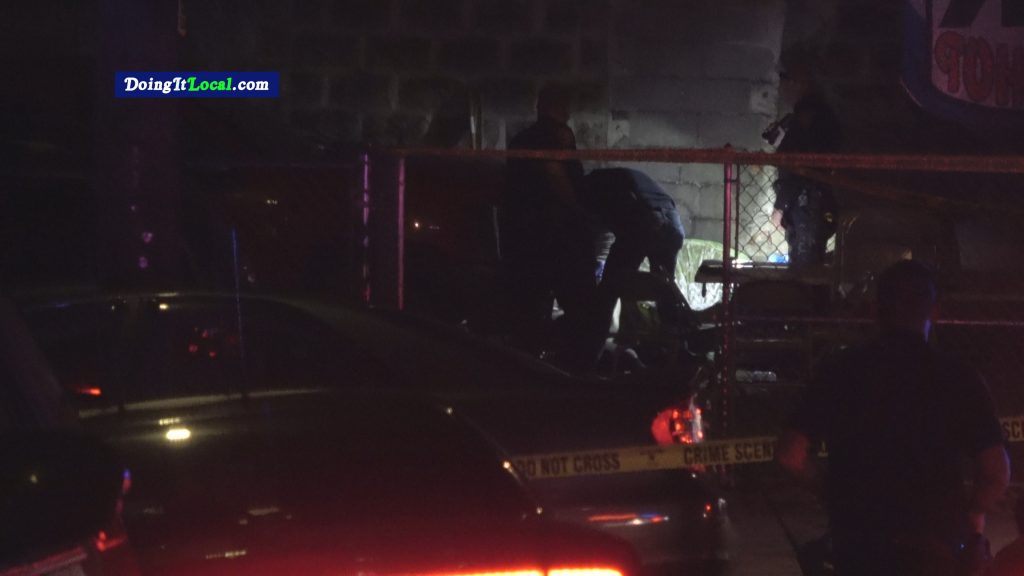
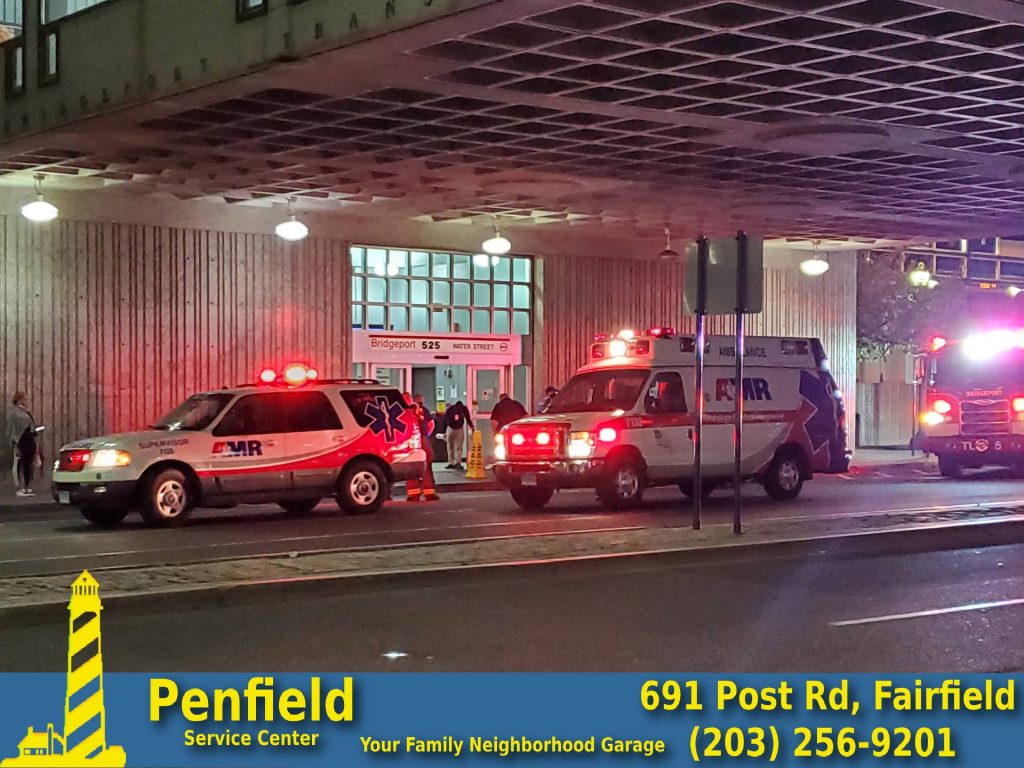
2020-10-02@7:07pm–#Bridgeport CT– A person was stabbed at the train station at 525 Water Street. The person’s condition is unknown at this time. The fire department was called to the scene for a water washdown of the area.
DoingItLocal is your ONLY breaking news source.
2020-10-02@6:06pm–#Bridgeport CT- Report of a pedestrian being hit at Knowllton and East Washington Avenue. Reports say the driver fled the scene.
This news report is made possible by:

#Stratford CT–On the morning of 9/30/20 a burglary was reported at a local car dealership on Barnum Avenue.
After making entry to the building the suspects acquired car keys and stole eight cars from the
lot. With the assistance of Bridgeport Police, Stratford Detectives were able to take two suspects
into custody later that day. The suspects were in possession of all the stolen keys and all eight
stolen cars were recovered in Bridgeport, Stratford and Hamden.
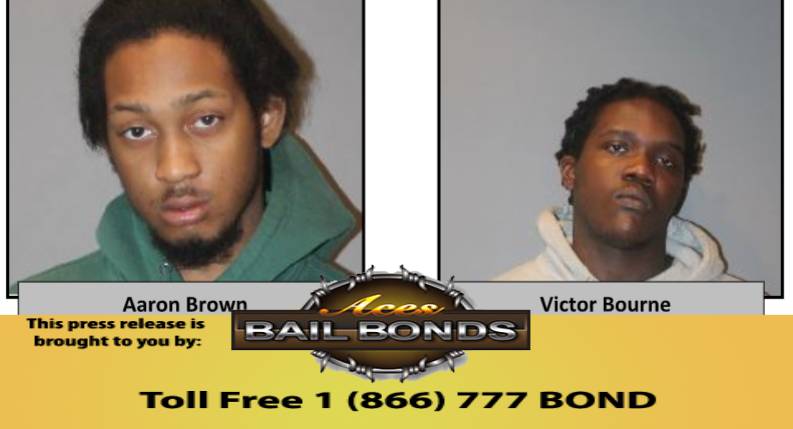
Aaron Brown 1/14/01 of Brooklyn NY and Victor Bourne 10/10/98 of Bridgeport were both charged with burglary third degree and larceny first degree and initially held on $25,000.00 bond. They were then released from custody on a promise to appear by the State Bail Commissioner. A court date of
10/30/2020 was assigned.
State Senator Marilyn Moore (D-Bridgeport) is applauding the passage of the “Take Back Our Grid Act” following a lengthy discussion on the Senate floor today. Senate Democrats voted to pass the “Take Back Our Grid Act,” vital legislation seeking to change how Connecticut’s utilities are run. Most importantly, LCO 4202, “An Act Concerning Emergency Response by Electric Distribution Companies and Revising The Regulation of Other Public Utilities,” seeks to hold utility companies accountable for their actions and practices, additionally adding further oversight and restitution for customers who suffer extended power outages.
“Utility companies such as United Illuminating and Eversource should be held accountable for how they respond to severe power outages across the state,” said Sen. Moore. “It’s a shame that we did not learn from past storms that we would not be prepared to handle Storm Isaias that knocked out power to thousands of residents across the state. The providers should have been prepared and because they were not, we knew that something had to be done. This legislation will help make sure nobody is left in the dark for days on end without some sort of compensation or responsibility held.”
The legislation as currently drafted would significantly change Connecticut utilities in many ways, with focal points including:
This press release is made possible by:
Fairfield, CT — Over the past decade, distracted driving has become one of the leading causes of vehicle crashes on our nation’s roads. Fairfield Police are encouraging drivers to put down the phone and remember: U Drive. U Text. U Pay. Fairfield Police will partner with the U.S. Department of Transportation’s National Highway Traffic Safety Administration (NHTSA) from October 8-12, 2020, for the national U Drive. U Text. U Pay. high-visibility enforcement effort. The goal of the campaign is to step up enforcement efforts to catch distracted, texting drivers and enforce distracted-driving laws. According to NHTSA, between 2012 and 2018, nearly 23,000 people died in crashes involving a distracted driver. In fact, there were 2,841 people killed in motor vehicle crashes involving distracted drivers in 2018.
While this represents a 12-percent decrease in distracted driving fatalities from 2017, there is clearly more work to be done. There are still thousands of preventable deaths happening on our roads every year. Violating Connecticut’s distracted-driving laws can be costly. The fine for the first offense is $150.00. The fine for the second offense is $300.00. The fine for the third and subsequent offenses is $500.00. Many drivers are guilty of a “double standard” when it comes to distracted driving. In its 2018 Traffic Safety Culture Index, the AAA Foundation reported that while nearly 96 percent of drivers believed it was very or extremely dangerous to read a text or email while driving, 4 out of 10 drivers admitted to doing so within the previous 30 days.
Drive Safe Every Trip Fairfield Police and NHTSA urge you to put your phone down when you get behind the wheel. If you need to text, then pull over and do not drive while doing so. If you’re driving, follow these steps for a safe driving experience: If you are expecting a text message or need to send one, pull over and park your car in a safe location. Once you are safely off the road and parked, it is safe to text.
Designate your passenger as your “designated texter.” Allow them access to your phone to respond to calls or messages.
Do not engage in social media scrolling or messaging while driving.
Cell phone use is habit-forming. Struggling to not text and drive? Activate your phone’s “Do Not Disturb” feature, or put your phone in the trunk, glove box, or back seat of your vehicle until you arrive at your destination.
Texting while driving is dangerous and illegal. Break the cycle. Remember: U Drive. U Text. U Pay.
This press release is made possible by:
2020-10-01@9:01pm–#Bridgeport CT- Report of a water main break at Fairfield Avenue and Main Street. The roadway is blocked off.
This news report is made possible by:
2020-10-01@ 8:43pm–Report of a car hanging off a ledge on Bayberry Lane. The occupants are not injured but are are trapped in the car. Firefighters working to free them. The car is reported at a 50 degree angle on a 100 foot slope.
This news report is made possible by:

2020-10-01@6:52pm–#Bridgeport CT– Reports of shots fired at PT Barnum Housing with a report of a juvenile taken into custody.
This news report is made possible by: