HARTFORD, Conn. (April 10, 2023) —Access Health CT (AHCT) today announced the deadline to apply for the 2023 Broker Academy Program is extended to April 30. To apply for the program, click here.
The Broker Academy creates a pathway to license health insurance brokers by recruiting from, and building the skillsets of, those who live and work in historically underserved communities throughout Connecticut. The program was created as part of AHCT’s mission to increase the rate of the insured and reduce health disparities in the state.
Program applicants must be 18 years or older, hold a high school diploma or GED, have 1-3 letters of recommendation and have community service experience. The Broker Academy is open to all Connecticut residents and preference will be given to applicants who reside or work in underserved areas.
Accepted Broker Academy students will receive free training, a five-month mentorship with an experienced broker, professional development and program support. Weekly training sessions for program readiness will be held in May and in-person classes begin June 5.
“This new deadline gives people more time to apply to the Broker Academy,” said Access Health CT Chief Executive Officer James Michel. “Connecticut residents in underserved communities need access to trusted brokers and information to help them enroll in a health insurance plan. The Broker Academy will train and license people who can then serve as a resource in these areas of the state.”
More Than a Dozen Projects Proposed for the Northeast to Advance Production, Consumption, and Infrastructure for Clean Hydrogen for Use in Hard to Decarbonize Sectors
(HARTFORD, CT) – The States of Connecticut, New York, New Jersey, Maine, Rhode Island, Vermont and the Commonwealth of Massachusetts today announced the submission of the group’s proposal for a Northeast Regional Clean Hydrogen Hub (NE Hub) to the U.S. Department of Energy to compete for a $1.25 billion share of the $8 billion in federal hydrogen hub funding available as part of the Infrastructure Investment and Jobs Act.
Together with the federal portion, the proposal represents a $3.6 billion investment and includes more than one dozen projects across seven Northeast states that advance clean electrolytic hydrogen production, consumption, and infrastructure projects, for hard to decarbonize sectors, including transportation and heavy industry, among others. Today’s announcement supports each state’s climate and clean energy goals to reduce greenhouse gas emissions and transition to clean energy across all sectors of the economy. Awards are anticipated to be announced in fall 2023.
The NE Hub partnership, formed in March 2022, initially included the States of Connecticut, New York, New Jersey, and the Commonwealth of Massachusetts. In August 2022, the States of Rhode Island and Maine joined the coalition, followed by Vermont in February 2023. In total, more than 100 partners signed a memorandum of understanding to collaborate with the states in developing the submitted proposal.
Clean hydrogen has the potential to provide an emission-free energy source for otherwise hard-to-decarbonize sectors and promote the creation of clean, good-paying jobs. Connecticut’s longstanding leadership in fuel cell development and manufacturing positions the state to be a leader in hydrogen development. The hub’s coordinated, multi-state strategy is designed to integrate projects across the region and create an ecosystem that connects hydrogen producers and users, technology original equipment manufacturers (OEMs), the research and development community, workforce development, and environmental justice organizations, and labor and communities’ representatives.
Connecticut Governor Ned Lamont said, “This is a momentous day for the Northeast Regional Clean Hydrogen Hub, and I’m thrilled with the compelling application we made to the U.S. Department of Energy. The public-private partners in our hydrogen ecosystem are worldwide leaders in business innovation, and climate leadership. I thank them for the collective effort getting us to this point, and I look forward to a favorable decision from the Department of Energy and the good-paying, local jobs and many other community benefits that will result.”
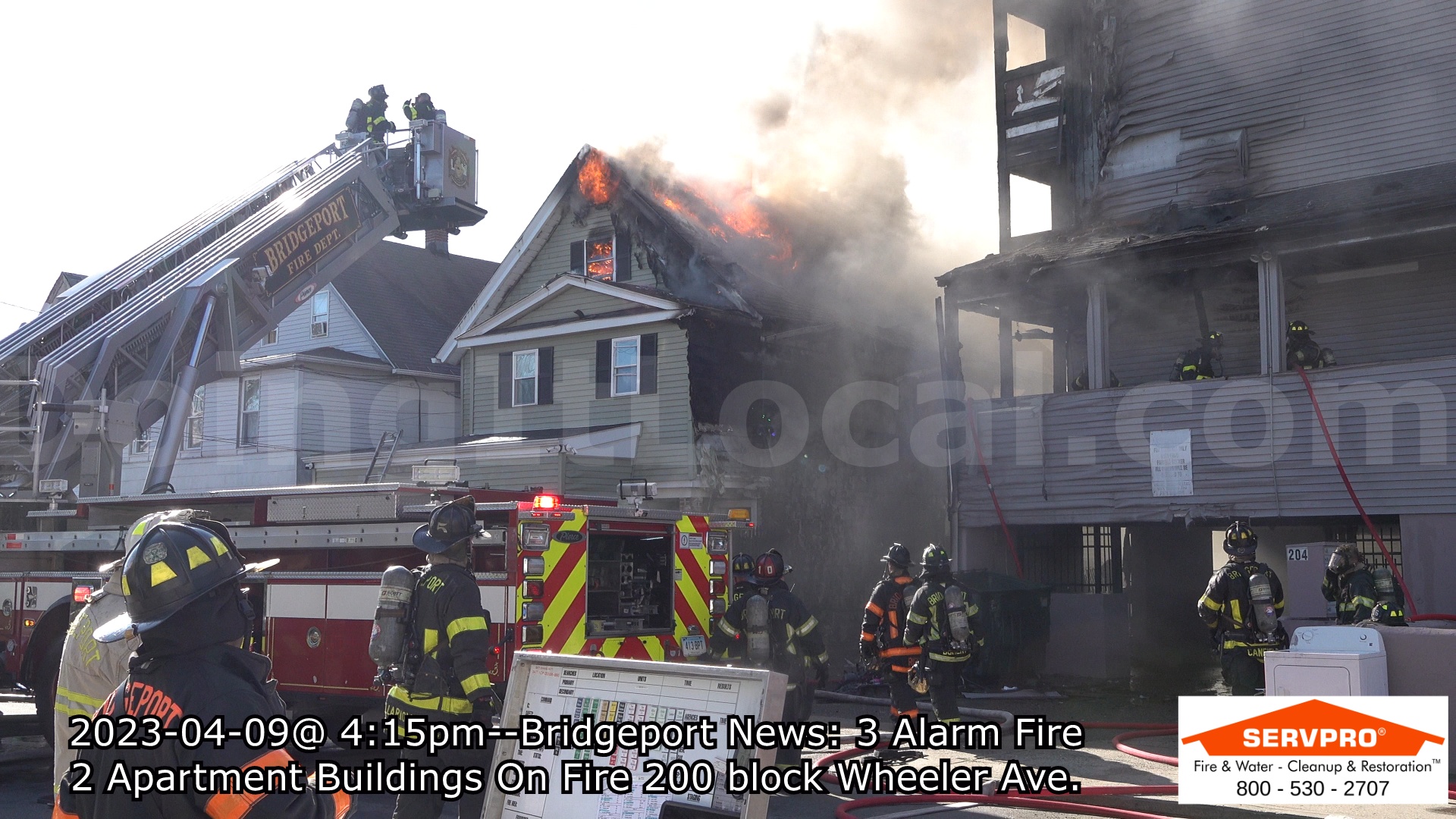
2023-04-09@4:15pm–#Bridgeport News: 15 families are without a home as the fire jumped from one apartment building to another aided by stiff breezes. Three alarms were called to bring additional personnel and equipment to the scene. Assistant Chief Sanzo told me that one firefighter received burns to his hands and a woman jumped from the 3rd floor onto a lower roof and was rescued by firefighters as well as 2 dogs. The fire marshal was called in to investigate the cause of the fire.
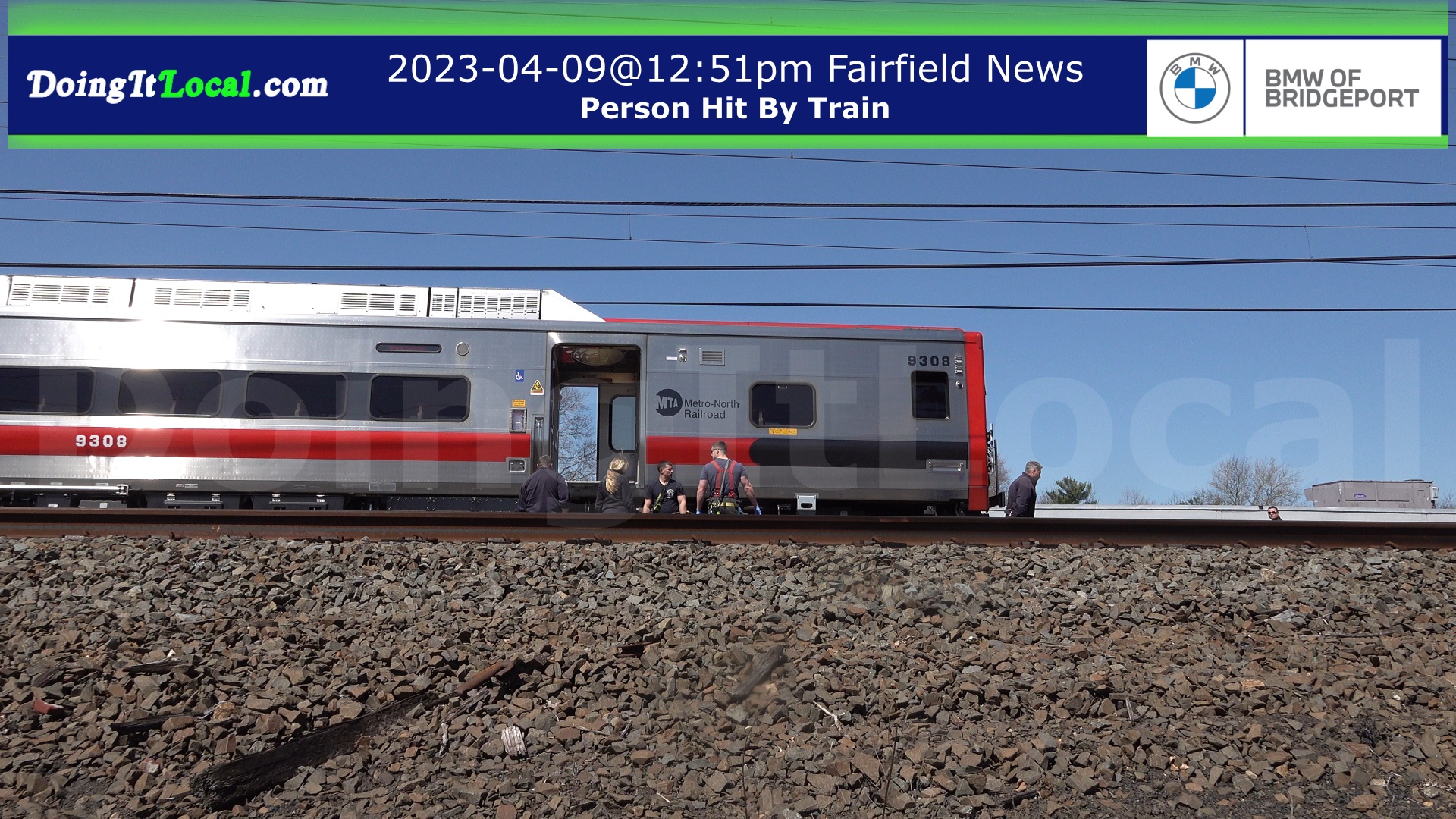
2023-04-09@12:51pm–#Fairfield CT– #mta– A person has been hit by a train behind Hansen’s Flower Shop on Post Road. There is no information about the person’s condition but EMS has been on the scene for quite a while with no sense of urgency to transport them to the hospital. The track has been closed for a time, holiday travelers can expect delays.
(NEWINGTON, CT) – The Connecticut Department of Transportation (CTDOT) announced the implementation of a program to reduce speeding in work zones and improve Connecticut roadway safety. The Know The Zone: Speed Safety Camera Program will be active on April 10, 2023, in Connecticut at work zones in Norwalk and East Hartford, followed by the Route 8 corridor between Shelton and Seymour shortly thereafter.
The Know the Zone: Speed Safety Camera Program is a way to increase safety for the workers on these jobs and the drivers and their passengers traveling through them. Statistics from the National Work Zone Safety Information Clearinghouse show in 2020, the last year of nationally available data, there were 774 fatal crashes in work zones resulting in 857 deaths. Out of the 857 fatalities, 117 were work zone workers demonstrating that the vast majority of those killed were drivers, their passengers, and pedestrians.
Here’s how the Know the Zone: Speed Safety Camera system works:
White SUVs containing radar and camera technology will be deployed to select work zones in Connecticut. Current and future locations will be publicly noticed ahead of placement at ct.gov/dot/knowthezone. Work zones with ongoing enforcement will also have signage 500 feet and 200 feet before the SUV to alert motorists.
At this time, speed safety systems will be active in no more than three designated locations at any one time and can be located within the limits of active highway work zones where the posted work zone speed limit is 45 mph or greater.
The system uses radar to identify vehicles traveling 15 mph or above the posted work zone speed limit. Cameras then capture a series of images of these vehicles, with the rear license plates used to identify registered owners.
If the information captured by the speed safety systems is determined to be accurate, a warning or citations will be mailed to the registered owners of the vehicle captured by the systems. The citations are called “Notices of Liability.” First offenses will result in a written warning with no fine. Second offenses will result in a Notice of Liability along with a $75 fine, and every offense after that will result in a $150 fine.
Similar programs have led to positive results in other states. Pennsylvania began continuously enforcing its Automated Speed Enforcement in Active Work Zones program in April 2020. That year, Pennsylvania saw more than a 19 percent reduction in work zone crashes. Two years after Maryland launched its SafeZones program in 2010, speeding violations in SafeZones construction sites decreased by more than 80 percent. Work zone-related crashes, fatalities, and injuries were at their lowest in over 10 years.
“This program may be new to Connecticut, but it has been implemented elsewhere in the northeast, and the evidence is clear: these systems work. DOT employees, construction workers, laborers, and emergency responders, put their lives on the line every day working on our roadways,” said Connecticut Department of Transportation Commissioner Garrett Eucalitto. “Our goal is to ensure everyone makes it home safe after their shift, and we’ll keep pushing to use the tools proven to reduce crashes and save lives. I want to thank Governor Lamont and members of the General Assembly for supporting this program and prioritizing safety for those working on our roadways.”
The Know the Zone: Speed Safety Camera Program emphasizes data privacy and protecting personal information. Only vehicles traveling 15 mph or greater than the posted work zone speed limit are photographed. If vehicle occupants are visible in any images, those images will be masked.
Additionally, data collected by the speed safety systems is used strictly for this program – no data is used for surveillance or any other law enforcement purposes.
In addition to using speed safety systems, CTDOT is encouraging all who drive on Connecticut roadways to know the zone by being aware of work zones and how to travel through them safely. At first sight of orange, drivers should be more alert, slow down, and follow posted speed limits and work zone instructions. Drivers also need to be aware of emergency responders on the roadway and follow the state’s Move Over Law. When approaching emergency responders, drivers must slow down and change lanes.
More information about the Know the Zone: Speed Safety Camera Program, including speed safety system locations and answers to frequently asked questions about the program, can be found at ct.gov/dot/knowthezone.
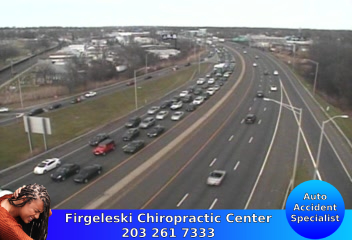
2023-04-08@4:46pm–#Bridgeport CT– #cttraffic– A crash I-95 southbound near exit 29. It’s not visible on the traffic cams but the backup is. Here is exit 30.