2020-08-25@5:40pm–#Milford CT– Today’s vehicle fire is on the Merrit Parkway near exit 55 southbound, a fully engulfed SUV.
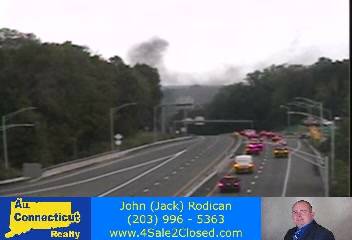

2020-08-25@5:40pm–#Milford CT– Today’s vehicle fire is on the Merrit Parkway near exit 55 southbound, a fully engulfed SUV.
HARTFORD, CT) – Governor Ned Lamont announced that he is doubling funding for the previously announced rental assistance program for Connecticut residents impacted by COVID-19 from $10 million to $20 million. That program, which is funded by the Coronavirus Relief Fund that is managed by the Office of Policy and Management, provides payments to landlords on behalf of approved tenant applicants, is administered by the Connecticut Department of Housing in partnership with the Connecticut Housing Finance Authority (CHFA) and 11 housing counseling agencies across the state.
Interested tenants can learn more on the department’s website or by calling 1-860-785-3111 during regular business hours.
The additional $10 million brings the total amount of state funding for renters, homeowners, and residential landlords impacted by COVID-19 up to $43.3 million. In addition to the $20 million rental assistance program, that funding provides mortgage relief to homeowners ($10 million), supports renters who were facing eviction before the pandemic ($5 million), rehouses people exiting homelessness or incarceration ($5.8 million), and supports renters excluded from federal assistance because of their or their loved ones’ immigration status ($2.5 million). Connecticut’s large cities also received $10 million under the CARES Act Emergency Solution Grants program to prevent homelessness and support homeless populations.
All housing assistance programs administered through the state and through CHFA include housing counseling to help renters and homeowners solve problems and develop plans to pay housing costs going forward. The Wells Fargo Foundation awarded CHFA a $500,000 grant to support these efforts to stabilize housing for Connecticut residents. The foundation’s generosity will assist the housing counseling agencies in paying for expenses and building capacity to manage demand for their assistance.
In addition, Governor Lamont announced that he will soon sign an executive order that will extend to October 1 the residential eviction moratorium protecting tenants who were current on their rent at the beginning of the pandemic. That extension will bring this important measure to protect public health in line with neighboring states’ and provide the federal government additional time to deliver much-needed assistance to renters and homeowners. The U.S. Department of Housing and Urban Development recently extended protections for tenants in homes with mortgages backed by the Federal Housing Authority through the end of the year.
“Supporting renters and landlords during this public health crisis is critical to controlling the spread of COVID-19,” Governor Ned Lamont said. “I’m trying to get people back to work and children back to school, and having a home you can call your own is a critical foundation for making that happen. Tenants who can pay their rent on time should do so, and landlords and tenants should work together to develop reasonable payment plans for these extraordinary circumstances. Speaking of working together, it is past time for the Senate Republicans in Washington to stop cruelly ignoring the pain American families are facing and start supporting the eviction protections and $100 billion emergency assistance programs the House voted out months ago.”
“This increase reflects Governor Lamont’s commitment to help those families that have been affected by the pandemic and are in need of financial assistance to pay their rents,” Connecticut Housing Commissioner Seila Mosquera-Bruno said. “I am thrilled with the partnership we have forged with the Wells Fargo Foundation to provide financial assistance to the housing counseling agencies.”
“Keeping families in their homes is critical during the pandemic,” Nandini Natarajan, chief executive officer of CHFA, said. “The additional funding from the state, along with the support of the Wells Fargo Foundation, will allow us to assist more individuals and families by providing the educational tools to help them regain their financial stability.”
“During this unprecedented time, far too many people are struggling financially and facing housing instability in Connecticut,” Eileen Fitzgerald, head of housing affordability philanthropy for Wells Fargo, said. “This grant for the Connecticut Housing Finance Authority will expand access to relief programs by engaging local housing counseling agencies to work toward keeping more Connecticut residents housed who are facing financial challenges as a result of the economic downturn caused by COVID-19.”
This press release was made possible by:

Bridgeport, CT – Today, Congressman Jim Himes (CT-04) submitted testimony to Connecticut’s Public Utilities Regulatory Authority (PURA) regarding the failures of Eversource before and after tropical storm Isaias that resulted in approximately a million Connecticut residents losing power, including tens of thousands who were without power for nearly a week. PURA held a hearing this morning regarding Eversource’s recently proposed rate increase, which should receive heightened scrutiny during the coronavirus crisis and until critical issues with Eversource’s preparation and response are addressed.
Congressman Himes’ full written testimony is here:
“For years, we’ve been told that Connecticut’s high electricity costs are part of the trade-off to replace and update poles, wires and pipes, as well as make other infrastructure improvements, to build a more reliable grid. Tropical Storm Isaias revealed what little return on investment ratepayers appear to have gotten in exchange. Power outages prevented hundreds of thousands of Connecticut residents from working or logging on for virtual learning. Downed trees and power lines trapped many of my constituents inside their homes and potentially put them at risk by delaying response times for emergency services. This unfolded for days as Eversource stumbled to navigate its storm response.
“We’ve been here before. When Hurricanes Sandy and Irene ripped across Connecticut, the state worked with Eversource to improve system resiliency. It’s not clear to me how consumers have benefited from these investments. Eversource restored power at a glacial pace, struggled to communicate with local officials and the public, and misjudged the storm’s strength. These errors exponentially increased the harm done to my constituents, particularly given the COVID emergency; staying safe during the pandemic is difficult enough even with power and utilities, and downright near impossible without them.
“Eversource could not provide restoration timelines for each town until Saturday, August 8, a full four days after the conclusion of the storm. But even those estimates failed to account for the unique circumstances on the ground. For example, seventeen medically vulnerable customers in Wilton were without power eight days after Isaias hit. Municipal leaders and emergency personnel also struggled to get answers from the utility’s community liaisons, if they could even contact them at all. Eversource must work more closely with our mayors and first selectmen to improve communication and provide frequent, accurate, and substantive updates on restoration. In addition, it must do a better job of communicating with the public. At the onset of the storm, technical issues with Eversource’s alerting system plagued customers trying to report damage and outages. In assessing any future rate hike, PURA should also review the utility’s preparation for Isaias. United Illuminating projected a “Level 3” event, whereas Eversource classified Isaias as a “Level 4” event until the storm struck.
“We must now begin the difficult but necessary step of assessing how we got here. I fully support PURA’s broader review of the utility companies’ preparation and planning for the storm. We also need to deal with the matter at hand today: Eversource’s recent rate increase. For our part, Connecticut’s federal delegation will continue to work with the Federal Energy Regulatory Commission (FERC) to reexamine formulas that have contributed to increased consumer expenses. But more needs to be done at the state level.
“For too long, Connecticut residents have borne the brunt of Eversource’s failure to respond to a crisis. Before PURA approves any further rate increase, we need to know that Eversource shares the burden equally with its customers. Moreover, we need to consider shifting to a system of performance-based regulation where Eversource is required to prioritize affordability and reliability. I look forward to working with our state officials, the members of this body, and the Governor to implement commonsense solutions like this and prevent a repeat of this debacle. Starting today, I hope that PURA will take appropriate steps to protect ratepayers and get the answers that we deserve.”
This press release is made possible by:

In the aftermath of Tropical Storm Isaias, Governor Ned Lamont and Insurance Commissioner Andrew N. Mais are reminding policyholders to review their homeowner’s insurance policy to better understand their coverage for property damage due to loss of power as the state is at the height of the 2020 Atlantic Tropical Storm season.
The Atlantic Tropical Storm season began on June 1 and runs through November 30.
“Storm Isaias left nearly a million customers without power. Many families and businesses experienced property damage, loss of work wages and other losses like spoiled groceries due to the mass power outage,” said Governor Lamont. “This is already a very difficult year and the Insurance Department is working to help with filing storm-related claims and answering your questions.”
“It is important to review your policies yearly with your insurance agent or broker to understand what is covered and what the limits are. Keep your policies and insurance contact information in a safe place should your property be damaged, and you must make a claim,” said Commissioner Mais. “Call the Department if you have questions or need help.”
Although most policies vary to some degree, there is common coverage for certain types of damage due to power outages.
Food spoilage due to a power outage is generally not covered under a basic homeowner, renters or condominium policy. However, this is a popular coverage for insurance companies to offer and some companies do in fact provide limited coverage in the policy. If the coverage is not included in the policy, you may be able to purchase for a nominal additional premium. Your agent should be able to tell you about the availability of coverage and how much it would cost.
Being forced out of your home due only to a loss of power is not normally covered under a standard homeowner, renters, or condominium policy. However, if a covered loss makes your home uninhabitable, coverage, up to specific limits, for any necessary increase in living expenses incurred by you so that your household can maintain its normal standard of living is generally provided.
If water pipes in your home were to burst in the winter months due to lack of heat from a power outage, damage to covered property would be covered by your policy.
Homeowners, condo, and renters insurance cover property for most types of damage including tornado, hurricanes, severe storms, rain, wind, and fires. The Insurance Department has useful information online on what is covered during a storm, more information on Storm Isaias, and Tips for Making a Storm Claim.
Your insurer can only cover what it knows you lost, which is why it is important to keep an inventory and accurate records for filing claims in the future.
The Department’s Consumer Affairs Division is available to assist policyholders with answers to questions.
This press release is made possible by:

#Hartford, CT — Attorney General William Tong is alerting consumers to surcharges by healthcare providers that may violate the Connecticut Unfair Trade Practices Act. Healthcare providers are strongly encouraged, if not required, to wear personal protective equipment (PPE) and to require that their patients do so, too. However, some providers may be improperly charging patients for the additional PPE or other COVID-19 control measures.
Attorney General Tong sent a letter this week to several healthcare provider associations and licensing boards to alert their members to the Office’s position that charging patients an additional fee for PPE constitutes illegal balance billing when the charges are assessed in connection with in-network services covered by the patients’ insurance plans. State laws prohibit participating providers from charging such fees to insured consumers.
“I understand that some healthcare providers are charging patients a fee for the additional PPE necessary to provided healthcare services during the pandemic. [T]he imposition of additional fees on patients may violate the Connecticut Unfair Trade Practices Act’s prohibition against unfair billing practices,” the letter states.
In the letter, Tong acknowledged that many providers and consumers are facing financial challenges. “While I understand that providers have incurred additional PPE costs as a result of the COVID-19 crisis, we must recognize that many patients are also experiencing financial hardship. For those contending with job loss or reduction in hours, as well as the loss of health benefits, any cost increase is devastating. We trust that you will work with us to ensure that patients are able to receive the care they need, consistent with consumer protection law,” the letter states.
Consumers may contact the Attorney General’s Consumer Protection Division with questions or complaints. The Division will investigate and mediate a billing dispute with a healthcare provider. Complaints may be filed at https://www.dir.ct.gov/ag/complaint/ or by calling 860-808-5420.
Consumer Protection Summer Intern Sarah Purtill assisted the Attorney General in this matter.
This press release was made possible by:
Hartford, CT) — Attorney General William Tong along with Secretary of the State Denise W. Merrill and Department of Consumer Protection commissioner Michelle Seagull, announced a settlement today with ANS, INC. d/b/a Workplace Compliance Services resolving a case involving allegations of government imposter fraud.
ANS, a Michigan based corporation, sent mailings to Connecticut LLCs offering to assist with their annual report filings with the Secretary of State. The mailings closely resembled official government forms and led a number of Connecticut businesses to believe the communication was from the government, not a private company, and they were required to use ANS’s services in order to remain in compliance with state law.
“These types of scams can be devastating for Connecticut’s small businesses who believe the deceptive mailings to be important and urgent government forms,” said Attorney General Tong. “This settlement is a favorable result for the Connecticut businesses that were victimized here and for small businesses generally. We recognize and appreciate ANS’s efforts to resolve this important issue.”
“We do not take efforts to mislead Connecticut businesses lightly, especially when they erode trust in government entities,” said Commissioner Seagull. “We are proud to partner with the Attorney General’s office to ensure businesses in our state are not misled by mailings like this.”
“Government imposter scams are a serious threat to thriving Connecticut businesses,” said Secretary Merrill. “I am proud to have worked with the Attorney General to have publicized this scam and am gratified to see it resolved. Connecticut businesses can always contact my office or visit business.ct.gov to get accurate information and official forms.”
ANS cooperated with the state’s investigation and agreed to bring its operations into compliance with Connecticut law. As a part of the settlement, ANS is required to register to do business in Connecticut, pay all past due taxes and fees, and issue refunds to customers who used its services. ANS is also required to clearly disclose on its mailings that it is not a government agency.
Government imposter scams can take many forms and can target individuals and businesses alike. In one of the more common schemes, scammers mail solicitations or send emails to businesses to “advise” them that they must purchase certain products or forms, or file particular reports in order to be in compliance with the law. The scammers then offer to assist businesses with satisfying these requirements in exchange for a fee.
Scammers are careful to design their mailings to resemble official government documents by incorporating elements such as seals, bar codes, and references to statutes and regulations. The mailings may include terms such as “IMPORTANT,” “OPEN IMMEDIATELY,” or “TIME SENSITIVE” to create a false sense of urgency. Businesses which fall prey to these tactics end up paying significant fees for services they either do not need, or could take care of themselves for much less money.
To report a scam or instance of fraud, contact the Office of the Attorney General at 860-808-5318 or file a complaint with the office at https://www.dir.ct.gov/ag/complaint
Assistant Attorneys General Brendan Flynn and Ann-Marie DeGraffenreidt, Michael Wertheimer, head of the Consumer Protection Department, and legal investigators Christine Buck and Caylee Ribeiro assisted the Attorney General with this matter.
This press release was made possible by:

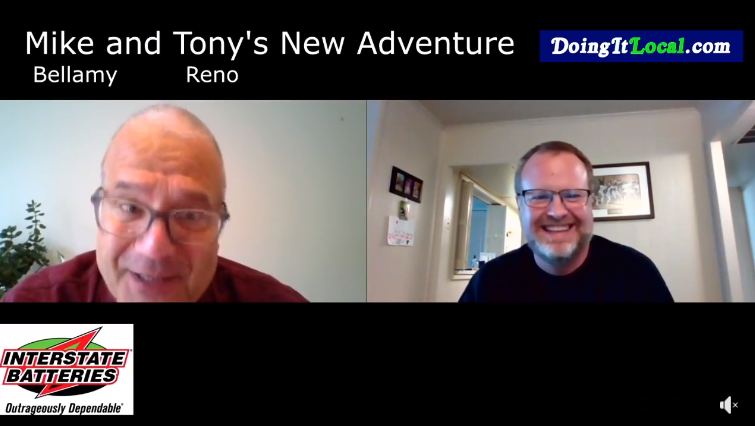
Tony Reno and Mike Bellamy’s New Adventure returns LIVE on DoingItLocal Thursdays at 9pm!
2020-08-14@9:30pm–#Easton CT– First responders are gathering at Apple Barn on Route 58 to search for two missing hikers at Troutbrook Valley Preserve on Bradley Road.
This news report is made possible by:
#Hartford, CT– Attorney General William Tong today urged Eversource and United Illuminating to do the right thing and immediately reimburse consumers for lost food and prescriptions using shareholders, not ratepayer funds.
“Eversource and UI need to do the right thing as ConEd has done in New York and reimburse consumers now for lost food and prescriptions. This needs to come out of shareholders—not ratepayer—funds. They have millions of dollars in profits they can use to cover this cost immediately without putting the burden back on ratepayers. Families were already struggling to pay for groceries before this storm. No one should go hungry because Eversource and UI didn’t do their jobs,” said Attorney General Tong.
This press release is made possible by: