

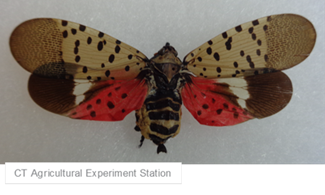

During the months of August through November the adults of this pest may be seen and can attach themselves or enter vehicles and trailers, “hitch hiking” their way into our state, and threatening our crops and trees. The Department of Transportation is asking travelers to check their vehicles for this pest, and if found, take a picture, destroy the insect, and report it to The Connecticut Agricultural Experiment Station.
What is the Spotted Lanternfly?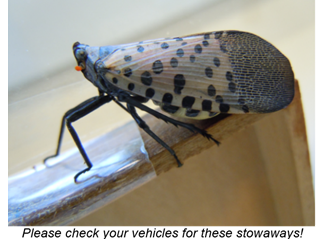
Why is it so important to stop an SLF invasion?
Approximately half of Connecticut’s trees are threatened by a spotted lanternfly invasion according to data from Connecticut’s Department of Energy and Environmental Protection (DEEP). As spotted lanternfly nymphs and adults feed on the sap from trees and vines, the entire plant can become weakened. The excretions from these leaf-hopping insects encourage the growth of black sooty mold, thereby reducing photosynthesis. Agricultural crops will have reduced yields due to the SLF feeding on fruit and generally weakening plants, if not destroying them (DEEP, 2020).
What should citizens do if they see a spotted lanternfly?
The public is urged to report potential sightings of this invasive pest. If you suspect you have found a SLF, snap a picture of it, destroy the insect, and fill out our reporting form by clicking this link: SLF Reporting Form. If you have other questions or comments please email ReportSLF@ct.gov. Include in your email your contact information, any photos, and any other pertinent information. Permission by residents and businesses for state and federal plant inspectors to examine host trees on private property will be helpful in determining the extent of the infestation. All reports are confidential.
What is CTDOT doing to help?
The Connecticut Department of Transportation is working collaboratively with the US Department of Agriculture, the Connecticut Agricultural Experiment Station and the Connecticut Department of Energy and Environmental Protection to:
- Spread the word via informational posters and flyers at our rest stops
- Allow traps to be placed within CTDOT Right-of-Way to help gauge the spread of this invasive pest
- Train our field personnel in identification, reporting, and proper precautions to halt the spread.
For more information on the Spotted Lanternfly in Connecticut, visit: Spotted Lanternfly – SLF (ct.gov).

