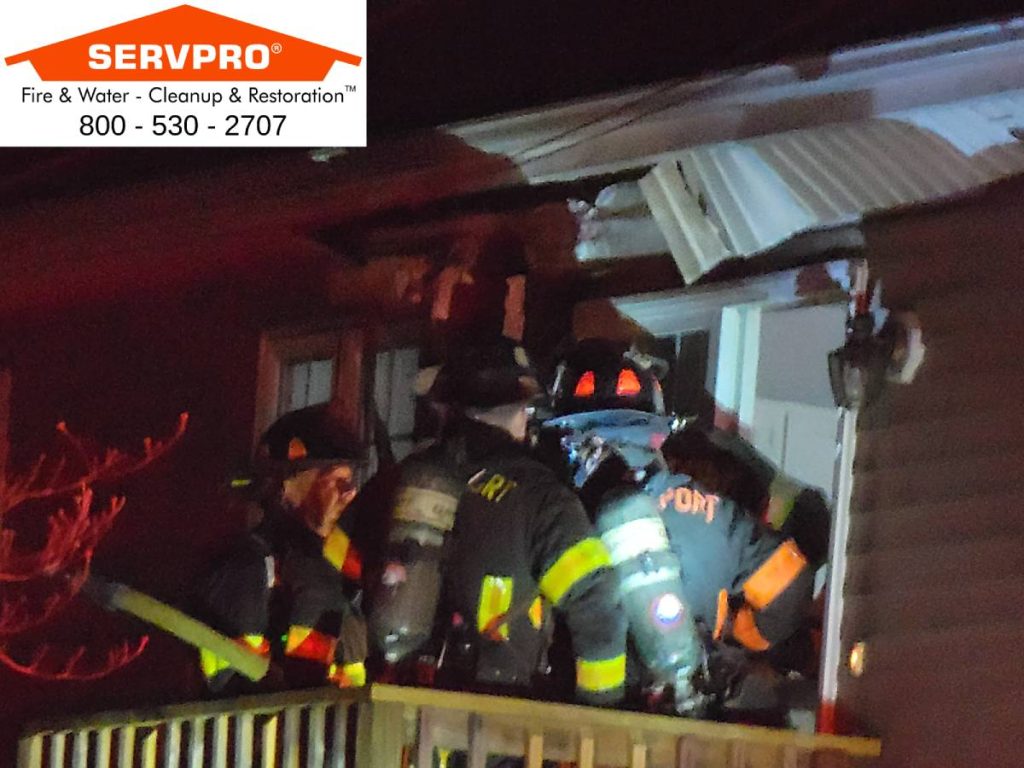
2022-02-12@11:27pm–#Bridgeport CT– Firefighters were called to the 800 block of Platt Street for a structure fire. Engine 12 was just returning from a medical call off Thorme Street and immediately responded. The found smoke coming from the soffit on the left side of the home and used a water can to douse the fire. Additional units arrived and established the fire scene along with a ladder truck to investigate the attic which was filled with smoke and they ensured the fire did not extend anywhere else to the home. The fire marshal was called to the scene to investigate the cause of the fire.
#Bridgeport CT— 2022-02-11@4:00PMish The Bridgeport Emergency Operation Center received reports of a male juvenile arriving at an area hospital with a gunshot wound to his foot. The GSW victim is a 14-year-old child from Bridgeport CT. The injury is considered non-life-threatening.
The Bridgeport Police Detective Bureau responded to the scene (100 block of Bird Street) and are investigating. There were no shot spotter activations reported in the area during the time of this incident. Anyone with information about this shooting is asked to contact the case officer, Detective Migdalia Ayala, at 203-581-5259 or utilize the Bridgeport Police Tips Line at 203-576-TIPS.
Governor’s Budget Proposal Includes Additional $64 Million to Support Law Enforcement, Crime Victims, and Public Safety
(HARTFORD, CT) – Governor Ned Lamont announced that on the first day of the 2022 regular session of the Connecticut General Assembly, which begins on Wednesday, February 9, he will introduce a comprehensive package of legislative proposals aimed at eliminating gun violence in Connecticut through a series of targeted initiatives, including the enhancement of efforts to stop the illegal flow of guns to the state, providing millions of dollars in additional funding to law enforcement to strengthen their work, and closing loopholes in gun safety laws, among others.
“While Connecticut remains one of the safest states in the nation with a violent crime rate less than half of the national rate, one shooting is one too many, and it is our responsibility to enact sensible policies that make our communities safer,” Governor Lamont said. “These are commonsense proposals that are focused on protecting our neighborhoods, stopping the illegal flow of guns into our state, and providing law enforcement and the communities they serve with the resources they need to address the root causes of violence.”
The new proposals build on the Lamont administration’s record of support for public safety, including:
Doubling the number of officers trained annually for municipal and state police, with a rapid pace of new state trooper classes planned;Providing $2.5 million for pandemic-related costs to help hard-hit police departments to put additional officers on the beat;Providing $2.5 million for pandemic-related costs to enable probation officers to reduce recidivism among juvenile and adult clients;Implementing a first-in-the-nation approach to reimburse hospital-based violence intervention programs using Medicaid funding; andSupporting commonsense public safety measures like Ethan’s Law and the 2019 ghost gun reform. The legislation Governor Lamont is proposing this session includes:
Establish a Gun Tracing Task Force to identify the source of illegal guns Background: Connecticut needs a coordinated statewide effort to identify the source of illegal guns.Proposal: Reestablish a Connecticut Gun Tracing Task Force to work with local and federal partners to stop the flow of illegal guns into our state. The task force will take advantage of the interstate compact to share eTrace reports that the administration entered into last year. This will be supported by $2.5 million in American Rescue Plan Act funding. Create a statewide community violence intervention program Background: Connecticut has strong local violence intervention programs. These programs provide a crucial service to the community: they reduce violence by working with law enforcement, hospitals, and the people most at risk of perpetrating and experiencing violence. However, they are not present in every community, they face limited resources, and there is little statewide coordination and evaluation.Proposal: Direct the Connecticut Department of Public Health’s Office of Injury Prevention to create a statewide community violence intervention program. The program will fund and support individual programs, and it will evaluate programs to create a statewide strategy for the most effective violence intervention approaches in the future. This will be supported by $3.5 million in American Rescue Plan Act funding. Stop the flow of illegal “ghost guns” Background: Untraceable “ghost guns” without serial numbers have been showing up with rapidly increasing frequency in crime in Connecticut. These guns are typically sold as partially-assembled kits and can be easily finished into operable weapons. “Ghost guns” are banned in Connecticut, but those that were manufactured prior to 2019 were grandfathered in, making the law nearly impossible to enforce.Proposal: Require registration of pre-2019 “ghost guns,” much like registration was required for large-capacity magazines in 2013. Ensure gun stores take their obligations seriously Background: While most Connecticut gun dealers take their obligations under state law seriously, a few do not scrupulously follow Connecticut’s laws. The lack of state licensing for gun dealers makes it difficult for the Connecticut Department of Emergency Services and Public Protection to enforce those laws, and lax security or inventory tracking can lead to diversion of guns into the wrong hands.Proposal: Create a state license for all gun dealers in Connecticut, so the state can provide oversight and guidance to gun dealers as they comply with state law. Existing businesses would receive a license without needing to pay the application fee. Modify carry laws Background: Gun owners are allowed to open and concealed carry essentially everywhere in Connecticut, even in many sensitive locations like polling places and protests. Police officers cannot ask those openly brandishing weapons, even on the streets of our center cities, for their permit unless they suspect they’ve committed a crime.Proposal: Make it easier for our law enforcement officers to request the gun permits of those openly carrying firearms, and ban the carrying of firearms in polling places, public buildings, public transit, and at demonstrations (such as marches, rallies, vigils, sit-ins, protests, etc.) Close loopholes in assault weapons laws Background #1: Gun manufacturers have ramped up production of assault-like weapons that evade assault weapons bans in Connecticut and other states. Those guns are functionally identical to the banned guns.Proposal #1: Expand the assault weapons ban to include guns with so-called “arm braces” and open a registration period for those who own these weapons. Background #2: Guns manufactured before 1993 are exempt from the assault weapons ban and can be sold and transferred, including those from out-of-state into Connecticut. Out-of-state gun dealers collect older assault weapons from other parts of the country and ship them into Connecticut.Proposal #2: Expand the assault weapons ban to include pre-1993 guns and open a registration period for those who own these weapons. Make domestic violence convictions an automatic disqualifier for holding a carry permit Background: Anyone who has been convicted of domestic violence is automatically disqualified from owning a gun federally, but not from holding a state permit, and the definitions differ. This forces the Connecticut Department of Emergency Services and Public Protection to hold a time-consuming suitability hearing in each case.Proposal: Automatically disqualify anyone who has been convicted of a family violence crime from holding a state gun permit. Strengthen laws on safe storage of firearms Background: Accidental deaths and illegal weapons frequently originate from improperly stored firearms. While Ethan’s Law – which Governor Lamont signed in 2019 – banned the negligent storage of a firearm, the law should provide more guidance to gun owners on what quantifies as safe storage. One example is that trigger locks are only currently required for handguns.Proposal: Require all firearms, not just pistols and revolvers, to be sold with a trigger lock. In addition to these statutory changes, Governor Lamont’s proposed budget adjustments make a landmark $64 million investment in public safety in Connecticut, addressing current needs and laying a foundation for lasting impacts. The governor’s public safety plan will make communities safer, attain swifter criminal investigation and clearing of court cases, and help victims recover from crime. These investments will make a meaningful and tangible difference in public safety – law enforcement can count on additional resources and partnership to address crime challenges, services for crime victims will be protected when they are needed the most, criminal investigations will speed up with the aid of state-of-the-art forensic sciences, and the court system will receive assistance clearing cases that have accumulated due to the pandemic.
They include:
$19 million to prevent and reduce repeat crime Addressing violent crime and motor vehicle theft by providing police departments funding to put more cops on the street to focus on these issues.Creating municipal real-time crime centers to use data and technology to prevent or respond in real-time more precisely to high-risk factors driving violence.Launching a statewide gun buyback program to get more firearms off the street.Training officers in highway interdiction techniques and deploying those officers strategically to stem the flow of guns into the state. $4 million to speed up criminal investigations using forensic science Deploying mobile crime labs directly to crime scenes and hot spots for rapid forensic-science analysis.Advancing Connecticut’s high-tech forensic-science capabilities — including DNA, ballistics, drug, and computer-crime technology — to process investigations with greater speed and precision. $23 million to clear accumulated court cases Funding will help clear cases that have accumulated during the pandemic in criminal court, evictions and foreclosures, child support, family and support matters, infractions, and family services.Clearing these backlogs will allow the system to respond more swiftly and effectively to crime challenges. $18 million to help crime victims recover from crime Filling an urgent gap left by disappearing federal Victims of Crime Act (VOCA) funding for victim services, including crisis intervention, safety planning, behavioral health counseling, and access to legal services.Providing shelter, housing, and transitional services for domestic violence victims facing heightened safety risks during the pandemic.
Fairfield large group brawl according to radio reports at Wafu Asian Bistro at 3671 Post Road Southport section of town. Someone pepper spraying with 20-30 people exposed.
HARTFORD–The Connecticut Congressional Delegation announced on Thursday that Connecticut is set to receive $7,771,342 for fiscal year 2022 from the U.S. Departments of Transportation and Energy to build out an electric vehicle (EV) charging network, an important step towards making EV charging accessible to all Americans. The funding will be made available under the new National Electric Vehicle Infrastructure (NEVI) Formula Program established by the Bipartisan Infrastructure Law.
The program will provide nearly $5 billion nationally over five years to help states create a network of EV charging stations along designated Alternative Fuel Corridors, particularly along the Interstate Highway System. The total amount available to states in Fiscal Year 2022 under the NEVI Formula Program is $615 million. States must submit an EV Infrastructure Deployment Plan before they can access these funds. A second, competitive grant program designed to further increase EV charging access in locations throughout the country, including in rural and underserved communities, will be announced later this year.
“Electric vehicles are key to tackling the climate crisis and reducing transportation emissions, but we must ensure the charging infrastructure is there to support these vehicles and the Americans who drive them. This funding from the bipartisan infrastructure bill will help expand the electric vehicle charging network across our state, so that electric vehicle charging is accessible and convenient for all communities,” said Murphy.
“Access to EV chargers is a game-changer in our fight to tackle the climate crisis and ensure Americans have energy to go the distance. This historic federal investment incentivizes more residents to drive electric by eliminating range anxiety — a significant obstacle to increasing sales of electric vehicles,” said Blumenthal.
“As we continue to combat climate change, it is critical that we invest in electric vehicles and make them more accessible to Americans. That’s why I was proud to vote for the bipartisan infrastructure law, which will send more than $7 million to Connecticut this year to build electric vehicle charging stations throughout the state. As Secretary Buttigieg said, this funding will help America lead the electric vehicle revolution,” said Larson.
“This announcement is a turbocharge to development of a reliable and accessible network of electric vehicle charging stations across Connecticut and the country,” Courtney said. “It’s particularly exciting for eastern Connecticut, home to innovative companies like Control Module in Enfield and Earthlight in Ellington who are poised to be big players in this effort. I’m proud to have worked to pass the bipartisan infrastructure law to ensure that we can help accelerate the development and deployment of this network while supporting and creating good jobs.”
“Electric vehicles are the future, and as a leader in this space, Connecticut is a model for creating a national EV system,” said DeLauro. “The bipartisan infrastructure law makes the most robust investment in electric vehicle charging in U.S. history, and I am proud that these funds are being swiftly distributed to Connecticut. Building a national network of charging stations directly delivers more jobs, cleaner vehicles, less pollution, and puts money in people’s pockets—allowing working families with electric cars to save up to $1,000 each year at the pump. Electric transportation is booming – there are more than 1 million electric vehicles on the road today. With these funds, we are building the infrastructure for our nation’s future.”
“As we transition to a clean, renewable economy, electric vehicles key,” said Himes. “But they won’t gain the necessary foothold until there is a reliable and widespread charging infrastructure that makes Connecticut families feel confident they can get where they’re going when they need to. The investment announced today will help us get there faster and build the future our communities deserve.”
“Electric vehicles are the future. Thanks to the support of the Connecticut delegation, we will receive more than $7 million through the Infrastructure Investment and Jobs Act to improve the charging infrastructure of our state,” said Hayes. “During my time in Congress, I have worked tirelessly to expand the deployment of electric vehicles – especially school buses. I am thrilled that my clean school bus framework which invests up to $5 billion to electrify our national school bus fleet is included in this legislation. Reducing carbon pollution is critical to combating the climate crisis and keeping our communities healthy.”
“A century ago, America ushered in the modern automotive era; now America must lead the electric vehicle revolution,” said U.S. Transportation Secretary Pete Buttigieg. “The President’s Bipartisan Infrastructure Law will help us win the EV race by working with states, labor, and the private sector to deploy a historic nationwide charging network that will make EV charging accessible for more Americans.”
“We are modernizing America’s national highway system for drivers in cities large and small, towns and rural communities, to take advantage of the benefits of driving electric,” said U.S. Secretary of Energy Jennifer M. Granholm. “The Bipartisan Infrastructure Law is helping states to make electric vehicle charging more accessible by building the necessary infrastructure for drivers across America to save money and go the distance, from coast-to-coast.” This press release was made possible by:
State Distributing $24 Million in Federal Congestion Mitigation and Air Quality Funds
(HARTFORD, CT) – Governor Ned Lamont today announced the Connecticut Department of Transportation (CTDOT) is awarding $24 million in federal funds to ten transportation projects aimed at improving air quality in Connecticut. As part of the Federal Highway Administration’s Congestion Mitigation and Air Quality (CMAQ) Improvement Program, Connecticut invests federal funds in local, cost-effective projects that will reduce vehicle exhaust emissions in areas of the state that do not attain national air quality standards.
CMAQ funds will be distributed to municipalities to support local projects, which include upgrading traffic signal technology and the installation of electric vehicle (EV) charging stations. Modernized traffic signals use real-time traffic information to accommodate changing traffic patterns, which reduces unnecessary idling at traffic lights.
“These strategic investments will not only help eliminate traffic bottlenecks in certain communities and buildout electric vehicle chargers in others, but they will also help move Connecticut towards cleaner air and a cleaner transportation system,” Governor Lamont said. “Technology in transportation can help unlock climate solutions for our state. By reducing air pollution in communities most impacted by its harmful effects, we can better deliver transportation equity and ultimately, better health outcomes for the people of Connecticut.”
“With expanded access to electric vehicle charging stations and increased use of adaptive traffic signals across the state, we are confronting climate change with actionable projects that will help reduce carbon emissions,” Connecticut Department of Transportation Commissioner Joseph Giulietti said. “These projects represent the future. We remain committed to using technology and innovative solutions to have a cleaner, more equitable, and resilient transportation system for all people across Connecticut.”
“These projects are a very welcome addition to our effort to reduce emissions from our transportation sector, the largest contributor to our state’s greenhouse gas emissions, and responsible for over 67% of smog-forming air pollution in Connecticut, at a time when we need to take meaningful action to reduce emissions and improve our air quality,” Connecticut Department of Energy and Environmental Protection Commissioner Katie Dykes said. “These projects build on other clean transportation efforts undertaken by the Lamont administration, such as the recent distribution of Volkswagen settlement funds toward electric projects – including 43 electric school buses – all in environmental justice communities. The interest we’ve seen in these projects show that municipalities in our state are eager to implement projects that support our transition to a clean transportation future. I am grateful to Governor Lamont, the Connecticut Department of Transportation, and our municipal partners for moving these critically important projects forward.”
CTDOT solicits municipal projects for the federal CMAQ program through the state’s metropolitan planning organizations and rural councils of governments, and awards funding based on project eligibility. The following communities are recipients:
Ansonia: $427,600 for non-automobile transportation and EV charging in the town’s transit-oriented development train station enhancement project.
Bridgeport: $4,000,000 to improve traffic flow, reduce delay, and alleviate congestion along the Park Avenue corridor.
Bristol: $3,370,500 to improve traffic operations with better traffic signal timing and pedestrian crossings in the downtown area in anticipation of Depot Square development.
Canton: $40,000 to install six dual EV charging stations for residents, school employees, students, and visitors.
Danbury: $1,250,000 to provide signal coordination improve traffic flow, reduce congestion and delays along State Route 39 and State Route 53 (Main Street and Osbourne Street).
Greenwich: $4,000,000 to install adaptive signal control technology to adjust signal timing on Route 1 within the town boundary.
Hamden: $3,789,037 to update substandard and antiquated traffic signal equipment.
Norwalk: $3,401,850 to continue upgrading the remaining outdated traffic signals, extending the adaptive traffic control system, adding the traffic signal priority and concurrent pedestrian phase.
Stamford: $3,375,000 to upgrade old signal equipment at six intersections that are within existing city signal systems.
West Hartford: $20,952 to support the purchase of the town’s first EV vehicles and charging station at the Town Hall for public use.