CTDOT Submits National Electric Vehicle Infrastructure Plan

The Connecticut Department of Transportation today announced its submission of Connecticut’s Charging Ahead Plan: A Strategy to Expand Public Electric Vehicle Charging to the U.S. Department of Transportation, establishing the state’s National Electric Vehicle Infrastructure (NEVI) program.

The NEVI program aims to build out a national system of electric vehicle (EV) chargers to enhance EV driver confidence while traveling long distances, including across state lines.

Established by the Infrastructure Investment and Jobs Act (IIJA), the NEVI formula program will provide $5 billion over five years for states to deploy direct current (DC) fast EV chargers along highway corridors. The funds can be used within one mile of federally approved designated corridors, with less than a 50-mile gap between chargers.

“Connecticut’s NEVI plan will provide our state with a robust roadmap to catalyze the expansion of a safe, reliable, and accessible fast-charging EV network along our interstates,” Connecticut Department of Transportation Commissioner Joe Giulietti said. “Transformational infrastructure programs focused on reducing carbon emissions like this will create a cleaner, more equitable, and resilient transportation system for all drivers.”

The NEVI Program provides formula funding to states to award grants to private, public, and nonprofit entities to build, own, maintain and operate chargers. The program pays up to 80 percent of eligible costs for charging infrastructure. CTDOT will not own or operate any EV chargers.

Phase one of Connecticut’s NEVI Plan will focus on building up to 10 locations consisting of at least four individual public DC fast chargers with a minimum power level of 150kW per port along Connecticut’s interstate system.

Connecticut was one of eleven states to sign the Zero-Emission Vehicle Memorandum of Understanding in 2013 and has committed to an ambitious EV adoption goal of 125,000-150,000 EVs on the road by 2025. With the increased deployment of electric vehicle charging equipment, it’s anticipated that consumers will experience reduced range anxiety and increased confidence in charging accessibility. The new funding for charging infrastructure buildout will encourage EV adoption, and also augment the existing Utilities Make-Ready Program and DEEP’s Volkswagen Diesel Mitigation-Zero Emission Infrastructure grant programs.

As of July 2022, there were over 25,000 EVs registered in Connecticut–a fraction of the nearly 2.9 million light-duty passenger cars and trucks registered in Connecticut. Connecticut Department of Motor Vehicles (CTDMV) records indicate that over the last year, more than 10,800 new light-duty EVs have been registered in Connecticut, increasing from over 9,700 the previous year.

For more information, visit Connecticut’s National Electric Vehicle Infrastructure Program (NEVI).

This press release was made possible by:

https://www.bmwofbridgeport.com/the-first-ever-bmw-ix/

Stratford News: 3 Children Injured When Branch Hits Them

VIDEO REPORT:

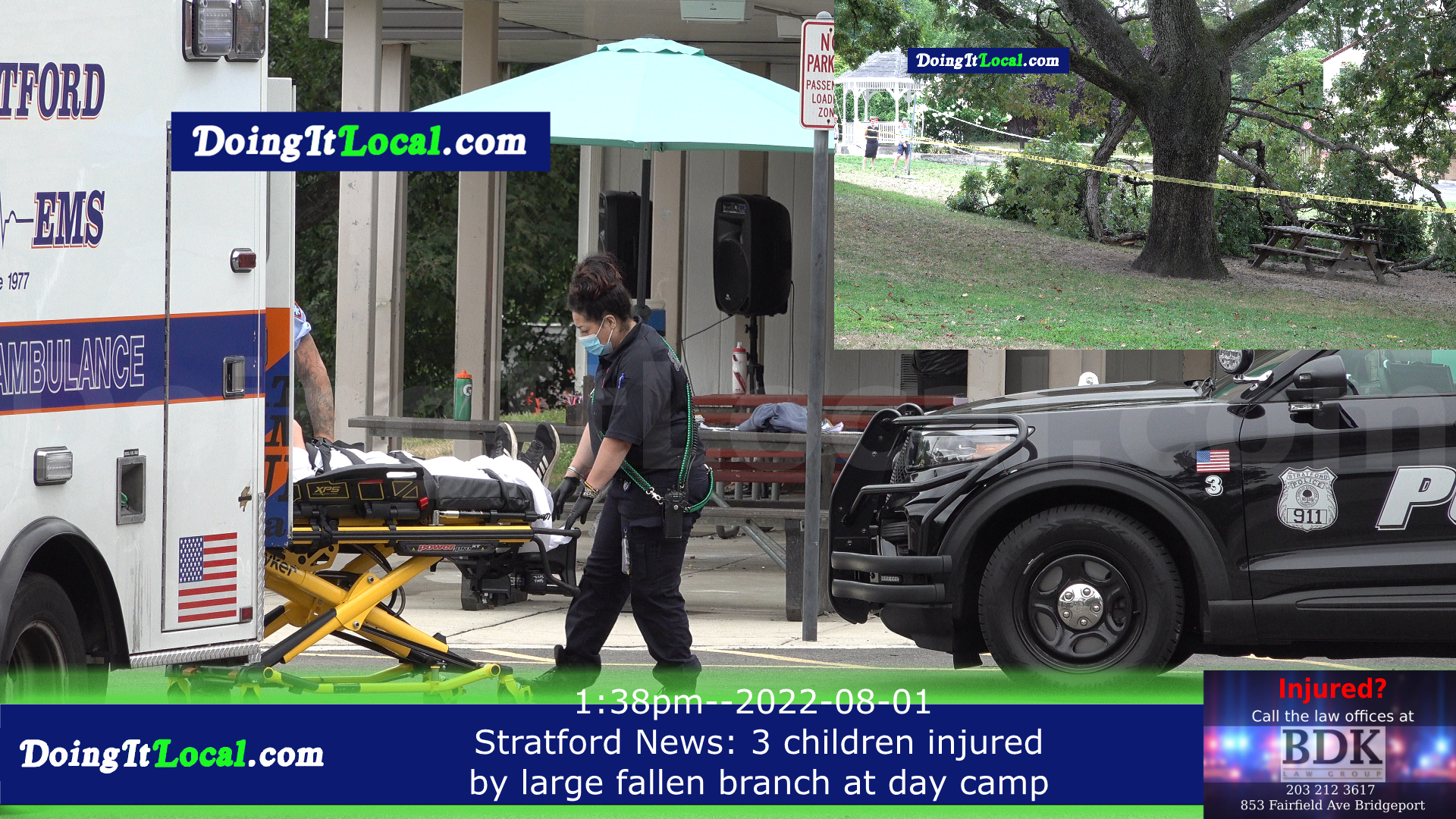
2022-08-01@1:38pm–#Stratford CT– 3 children were injured with non-life-threatening injuries at the Sterling House Day Camp located at 2283 Main Street this afternoon. The tree was located at the picnic tables. According to radio reports, one child had a head injury, another with facial injuries, and another with a shoulder injury. They were all transported to the hospital by Stratford EMS.

GOVERNOR LAMONT DIRECTS $3.5M IN REGIONAL GREENHOUSE GAS INITIATIVE FUNDS TO ENERGY EFFICIENCY PROGRAMS FOR LOW-INCOME CUSTOMERS THAT WILL REACH AN ADDITIONAL 1,000 HOMES

(HARTFORD, CT) – Governor Ned Lamont today announced that he is directing $3.5 million in funds from the Regional Greenhouse Gas Initiative (RGGI) to be allocated to Connecticut’s utility-administered energy efficiency programs for low-income customers. This support will increase the delivery of energy efficiency programs that save residents money on their utility bills while reducing energy use and carbon emissions.

The funding augments an approximate annual budget of $37 million dedicated to low-income energy efficiency programs statewide and will be used to support the Home Energy Solutions-Income Eligible (HES-IE) program, allowing the program to reach approximately 1,000 additional homes in 2022.

HES-IE provides home energy audits and core weatherization measures, such as air and duct sealing, for an average savings of $250 on annual household energy bills. After the initial HES-IE visit, customers can receive additional upgrades, such as insulation and efficient windows, that can provide even more savings. Income-eligible customers receive these services for little to no cost through the HES-IE program. HES-IE is available to customers that have a household income that is 60% or less than the state median income, participate in utility forgiveness or matching payment programs, or receive other forms of means-tested assistance.

“Global disruptions in the energy sector are hitting low-income households especially hard, and initiatives like this are designed to provide relief,” Governor Lamont said. “I’ve worked to protect our state’s award-winning energy efficiency programs from damaging budget sweeps and supported Connecticut efficiency contractors through pandemic disruptions. These programs are here to help consumers save money during this energy crisis. These funds will help our most vulnerable residents lower their energy costs, while also helping the environment.”

“Energy efficiency is at the core of the Lamont administration’s strategy to reduce emissions from the electric sector, an area Connecticut has made tremendous strides in over the past several years,” Connecticut Department of Energy and Environmental Protection (DEEP) Commissioner Katie Dykes said. “The RGGI program has long been a workhorse providing funding for our energy efficiency programs, and protecting ratepayer efficiency funds has been a priority of Governor Lamont since he took office. This funding will provide residents with a sustainable source of savings on energy costs over time and will be complimented by DEEP’s latest Conservation and Load Management Plan, which directs Connecticut’s utilities to redirect RGGI funding as needed to programs benefitting low-income, energy burdened, and other underserved customers, including those who live in multi-unit dwellings.”

Under Governor Lamont’s leadership and DEEP’s oversight, the energy efficiency programs are well-positioned to meet this heightened demand. In addition to protecting ratepayer efficiency funds from being diverted for other purposes, the Lamont administration has also taken steps to build capacity in Connecticut’s energy efficiency workforce, including through the 2021 launch of the Office of Workforce Strategy’s CareerConneCT program, which will train local workers in in-demand industries such as energy efficiency. With this support, energy efficiency programs will continue to be a source of energy savings, emissions reduction, and economic development for the state.

At the onset of the COVID-19 pandemic, the Lamont administration, including DEEP and the Department of Economic and Community Development, worked closely with the utilities, Energy Efficiency Board, contractors, and other stakeholders to ensure contractors could continue to perform essential services for customers through the statewide energy efficiency programs by implementing health and safety procedures and incentivizing customer participation. These measures generated record levels of demand for the energy efficiency programs that persist to this day. Demand for the state’s utility energy efficiency programs has peaked this year as consumers look for ways to curb their energy costs.

HES-IE is one of many utility-administered energy efficiency programs available through the EnergizeCT initiative. Energize CT provides Connecticut residents and businesses with services, financing, and rebates for energy efficiency and clean energy improvements. More information is available at energizect.com.

RGGI is a cooperative effort among the states of Connecticut, Delaware, Maine, Maryland, Massachusetts, New Hampshire, New Jersey, New York, Rhode Island, Vermont, and Virginia to cap and reduce power sector CO2 emissions. RGGI is the nation’s first mandatory, market-based CO2 emissions reduction program. Within the RGGI states, fossil-fuel-fired electric power generators with a capacity of 25 megawatts or greater must hold allowances equal to their CO2 emissions over each three-year control period. Generators must also hold allowances equal to 50% of their emissions during each interim control period (the first two calendar years of each three-year control period). The current three-year control period is January 1, 2021, to December 31, 2023.

This press release was made possible by:

STRATFORD LIBRARY REVEALS STRATEGIC PLAN

#Stratford CT– The Stratford Library Board of Trustees approved a new Strategic Plan for the Library. The new plan will guide and prioritize the Library’s work over the next several years, in response to all that the Library has learned from community members, patrons and colleagues from other Connecticut libraries. “There is no better way to celebrate the Stratford Library’s 125th Anniversary of serving the residents of Stratford than to give serious thought to and plan how the library will meet current and future needs”, according to Board member and Strategic Planning Chairman Beth Daponte.
“The Stratford Library’s 2022-2025 Strategic Plan, created under the wise tutelage of Plan A Advisors, represents the results of a comprehensive process of community and board engagement. The Strategic Plan and the process behind it helps prioritize the important work of the library’s incredible staff and committed Board of Trustees.” The Strategic Plan updates the library’s Mission and Vision Statements and has a series of goals designed to fulfill them. The mission statement of the Stratford Library is: to empower and enrich our diverse community by providing access to innovative services, information, and ideas. The vision statement crafted to serve as a headline for the entire plan is: Our Library will be a welcoming and dynamic community center for a diverse and evolving Stratford, recognized as the Town’s essential partner in guiding all residents to access the informational, educational, and cultural resources they need to thrive.


“This mission statement emphasizes the Library’s role as the Town’s essential partner”, according to Library Director Sheri Szymanski. “This is intentional as it recognizes that the Library is first and foremost a civic institution that shares responsibility with several agencies for Stratford residents’ wellbeing.” Goal I of the plan reinforces that sentiment: The Stratford Library will advance the social, economic and educational needs of residents through programming and resources that support their success. Goal 2 makes it clear that the Library has a responsibility to serve ALL Stratford residents, not just those who use the facility regularly, and that the Town offers many resources that the Stratford Library is ideally suited to connect them with. The goal states: The Stratford Library will expand community outreach and engagement so that every Stratford resident feels connected to the Library’s and Town’s rich resources. Goal 3 states: The Stratford Library will partner with human service providers to connect residents in need to resources that ensure their well-being. Stratford librarians are increasingly asked to provide residents with information about human services and this need has increased substantially in recent years. Librarians are not trained counselors or case workers, but libraries are appreciated by many for offering information and programs without stigma or judgment Goal 4 is more inward looking: The Stratford Library will strengthen both physical and organizational infrastructure to position it for continued excellence in its programs and services. This recognizes that any successful institution or enterprise, whether a school, a hospital, a coffee shop or a retail outlet must continue to invest in itself and its infrastructure to remain at the top of its game. Each goal is supported by a series of objectives designed to implement each goal. The entirety of the Stratford Library’s new Strategic Plan can be found on their website at: www.stratfordlibrary.org/strategic-plan.

This press release was made possible by:

Bridgeport News: Water Rescue

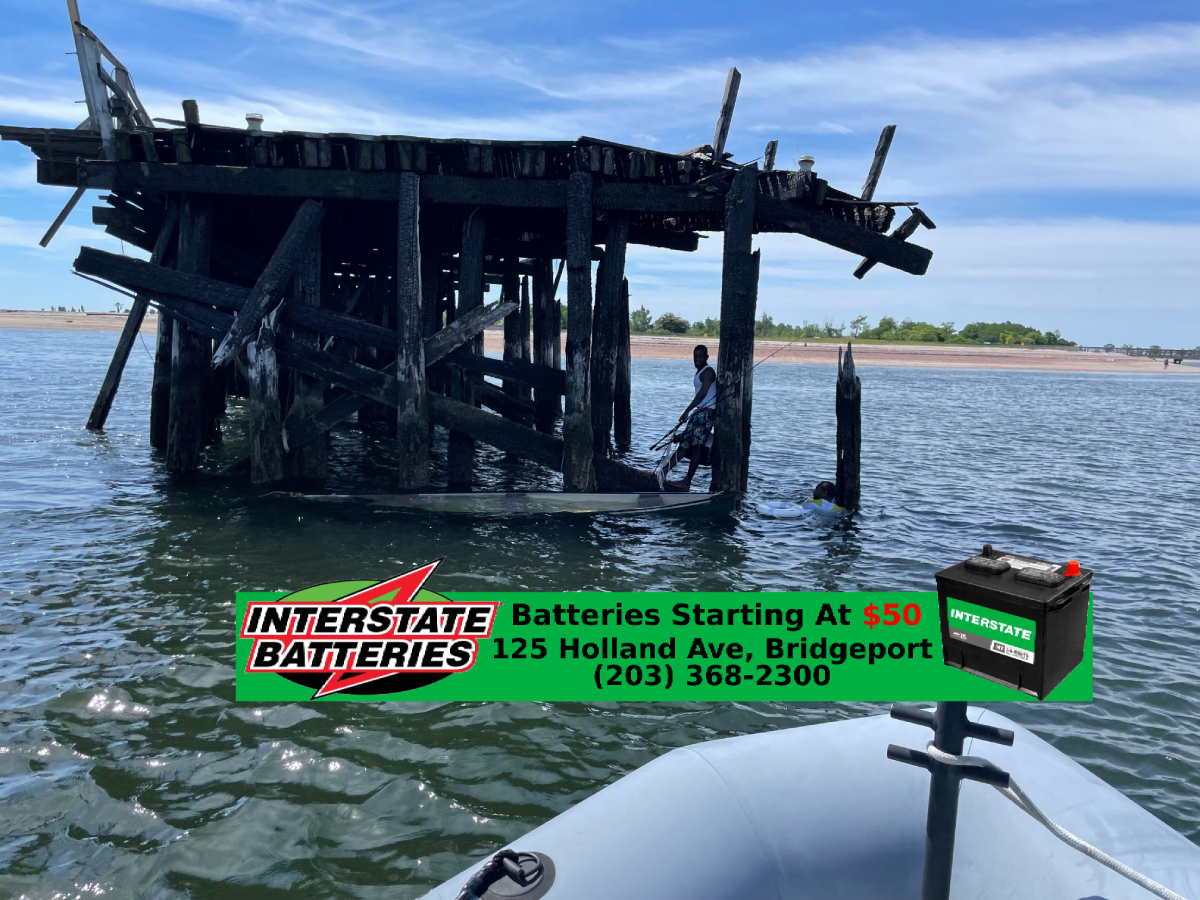
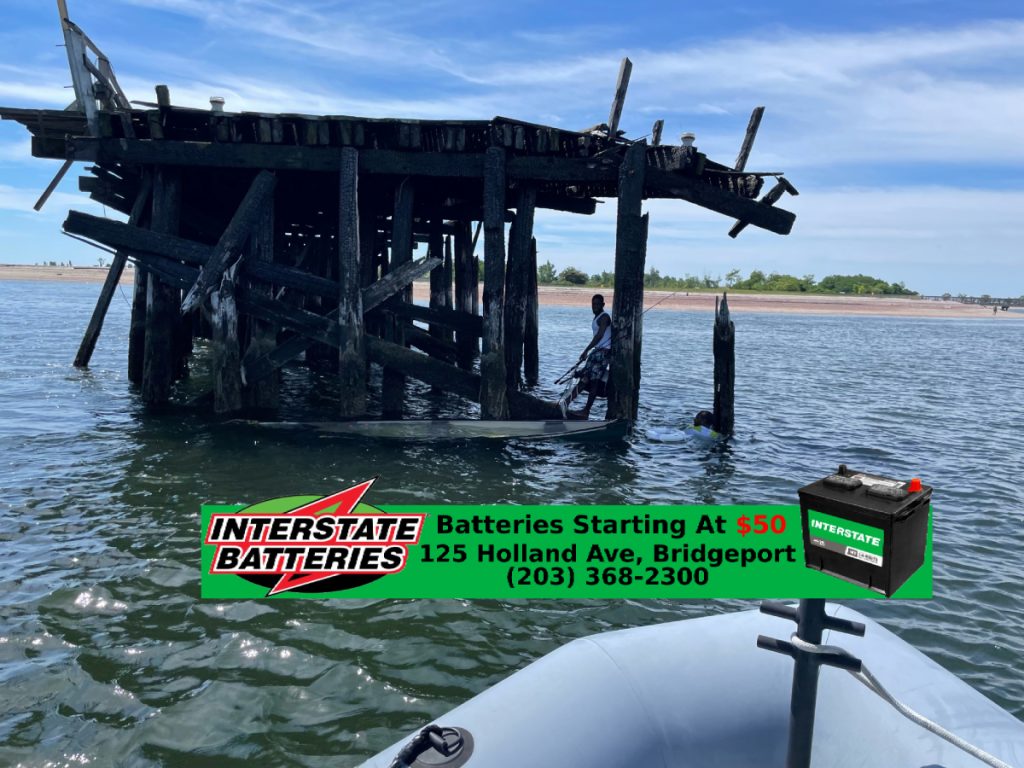
2022-07-31@ 10:47 am the Bridgeport Emergency Communications Center received a 911 call regarding a preliminary report of an overturned canoe and two parties in the water near the Pleasure Beach Bridge. The Bridgeport Police and Fire Marine Units were dispatched and upon arrival reported two male parties holding onto the pilings of the old Pleasure Beach Bridge. Those assisted reported their canoe was overturned by the wake of a passing power vessel while they were fishing.  Both parties were taken back to the dock safely by the marine units. Superficial injuries were reported with no medical attention requested.

Exit mobile version