

“At a time when the cost of living is at the forefront of everyone’s minds, these delivery app fees are nothing more than a greedy assault on consumers’ pocketbooks.”
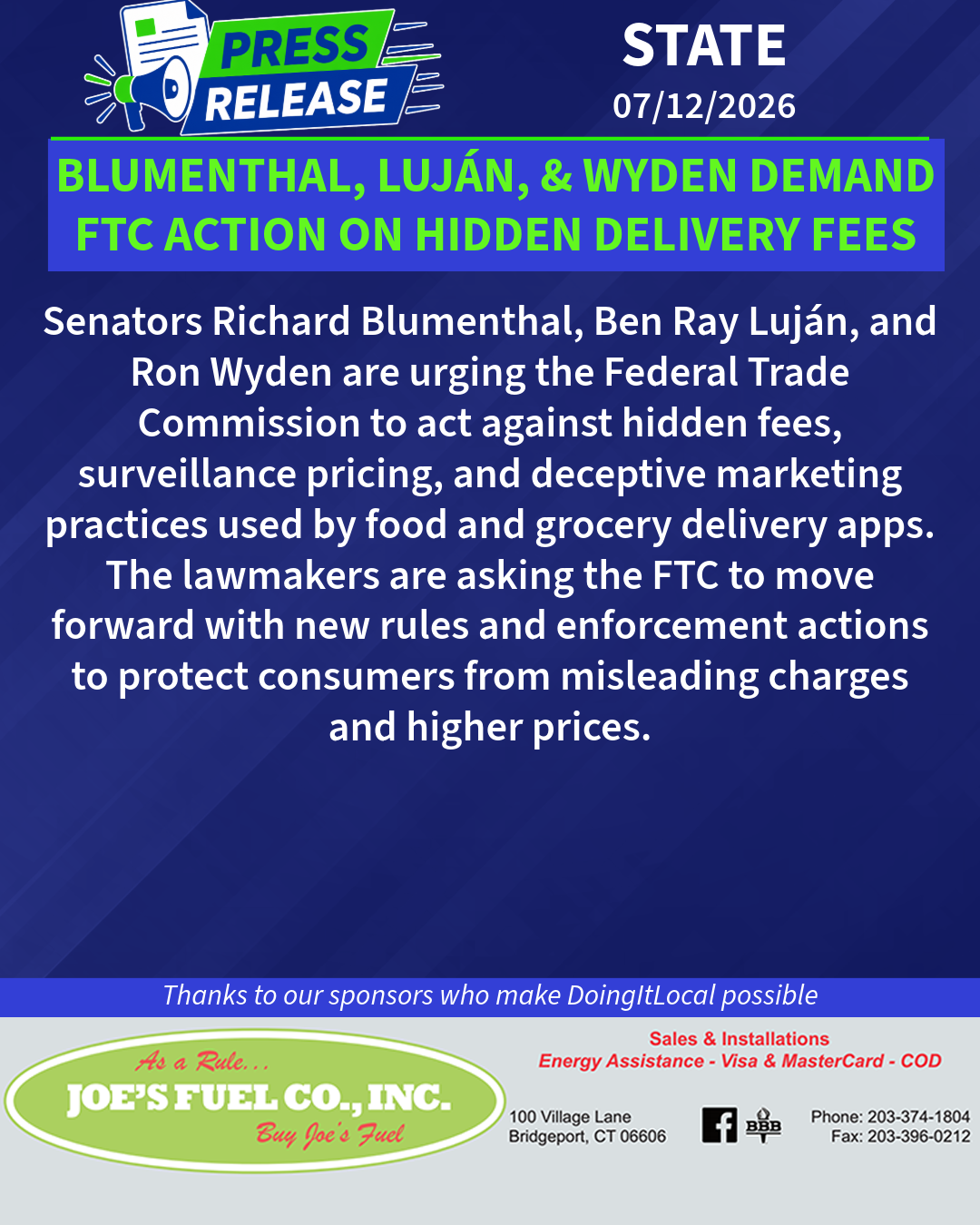
[WASHINGTON, D.C.] – U.S. Senators Richard Blumenthal (D-CT), Ben Ray Luján (D-NM), and Ron Wyden (D-OR) this week called on the Federal Trade Commission (FTC) to take swift action to stop food and grocery delivery apps from using deceptive fees, surveillance pricing, and anti-consumer marketing tactics. The FTC is currently considering a rule to address these deceptive fees. In a letter sent to FTC Chair Andrew Ferguson, Blumenthal, Luján, and Wyden called on the Commission to proceed with the rulemaking and pursue enforcement to protect consumers from these predatory practices.
“For millions of Americans, including busy parents and people with mobility issues, food delivery is a lifeline, not a luxury. However, delivery apps are taking advantage of consumers by slapping on unexplained and misleading fees that lead to exorbitantly higher prices. Delivery apps such as Uber Eats and DoorDash justify these additional charges under the pretext of long-distance deliveries, small orders, priority or express deliveries, and ‘regulatory compliance.’ To further obscure these fees, delivery apps often lump costs together and hide fees during the checkout process,” the Senators wrote.
The Senators continued, “Price gouging through hidden fees and markups clearly falls within the Commission’s purview of combating unfair and deceptive acts and practices. The Commission’s recent advance notice of proposed rulemaking (ANPRM) on delivery app fees presents the perfect opportunity to close this gap.”
“At a time when the cost of living is at the forefront of everyone’s minds, these delivery app fees are nothing more than a greedy assault on consumers’ pocketbooks. As such, we encourage the Commission to proceed with this rulemaking and pursue enforcement against deceptive hidden fees, surveillance pricing, and markups related to food and grocery deliveries,” the Senators concluded.
The full text of the Senators’ letter is available here:
Dear Chair Ferguson,
As consumers face rising costs and price gouging when buying groceries and meals, we write to urge the Federal Trade Commission (the Commission) to proceed with rulemaking and bring enforcement actions to put an end to deceptive fees, surveillance pricing, and anti-consumer marketing tactics by food and grocery delivery apps.
For millions of Americans, including busy parents and people with mobility issues, food delivery is a lifeline, not a luxury. However, delivery apps are taking advantage of consumers by slapping on unexplained and misleading fees that lead to exorbitantly higher prices. Delivery apps such as Uber Eats and DoorDash justify these additional charges under the pretext of long-distance deliveries, small orders, priority or express deliveries, and “regulatory compliance.” To further obscure these fees, delivery apps often lump costs together and hide fees during the checkout process. They also withhold whether they charge more for the same items that cost less in person at the same time they tack on these additional fees. Lastly, mandated pricing disclosures reveal that delivery apps rely on consumers’ personal data, such as their order history, to set prices. For these reasons, we encourage the Commission to stop delivery apps from engaging in surveillance pricing, which exploits consumers by charging drastically unequal prices.
Independent price comparisons confirm that consumers are being price gouged by delivery apps. A study by LendingTree found that nearly 4 in 10 Americans use delivery services at least once a week and pay, on average, almost 80% more than they would have picking up those meals themselves. The New York Times found that Uber Eats charged consumers 91% more through price markups and fees for the same order at a nearby Subway. The fees imposed by delivery apps also hurt restaurants and businesses, which can incur their own fees through commission costs and are often incorrectly blamed for increased prices that they do not control.
Price gouging through hidden fees and markups clearly falls within the Commission’s purview of combating unfair and deceptive acts and practices. Over the years, the Commission has brought numerous enforcement actions against platforms for misrepresenting costs stemming from food and grocery deliveries, including Grubhub, Instacart, Amazon, and Walmart. More notably, the Commission implemented its Junk Fee Rules in May 2025 to require total price disclosures and prohibit misleading fees for certain goods and services. While the Commission recognized that consumers were dissatisfied with these fees on food and grocery delivery apps, the final rule limited its scope to live ticketing sales and short-term lodging. The Commission’s recent advance notice of proposed rulemaking (ANPRM) on delivery app fees presents the perfect opportunity to close this gap.
At a time when the cost of living is at the forefront of everyone’s minds, these delivery app fees are nothing more than a greedy assault on consumers’ pocketbooks. As such, we encourage the Commission to proceed with this rulemaking and pursue enforcement against deceptive hidden fees, surveillance pricing, and markups related to food and grocery deliveries.
Thank you for your attention to this matter.