GOVERNOR LAMONT ACTIVATES CONNECTICUT’S EXTREME HOT WEATHER PROTOCOL TO HELP ENSURE THE AVAILABILITY OF COOLING CENTERS OVER THE NEXT SEVERAL DAYS


(HARTFORD, CT) – Governor Ned Lamont announced that due to a weather forecast indicating that temperatures over the next several days will reach more than 95 degrees with the heat index expected to go over triple digits at times, he is directing Connecticut’s extreme hot weather protocol to be activated beginning at 8:00 a.m. on Tuesday, July 19, 2022, and remaining in effect through 8:00 p.m. on Sunday, July 24, 2022.

The purpose of the protocol is to ensure that the most vulnerable populations receive protection from the hot conditions. While enacted, a system is set up for state agencies, municipalities, and other partners to coordinate with United Way 2-1-1 to make sure that information regarding cooling centers is available statewide, providing a location to get some relief from the hot conditions.

Anyone in need of a cooling center should call 2-1-1 or look online at 211ct.org to find their nearest location.

“We’re about to experience our first heat wave of the year that over the next several days will bring very hot conditions, especially during the peak sunlight hours of the day,” Governor Lamont said. “I strongly urge anyone who needs a place to cool off to call 2-1-1 to find their nearest available cooling center. Everyone should take the necessary precautions as the heat rises over the next several days. A few steps can greatly reduce heat-related issues, especially for the elderly, the very young, and people with respiratory ailments who are more susceptible to the effects of high temperatures.”

The following actions are implemented while the protocol is enacted:

The Connecticut Department of Emergency Services and Public Protection’s Division of Emergency Management and Homeland Security uses its WebEOC communications network, which is an internet-based system that enables local, regional, and state emergency management officials and first responders to share up-to-date information about a variety of situations and conditions. Municipalities and other partners submit information on the opening of cooling centers into the WebEOC, providing a real-time database on the availability of these locations statewide. United Way 2-1-1 uses the system to act as a clearinghouse to assist residents in locating a cooling center. Regional coordinators from the Division of Emergency Management and Homeland Security monitor WebEOC in order to respond to any requests from municipalities for state assistance. The energy utility companies provide the state with regular updates regarding the impact of the weather conditions on their respective utilities throughout the duration of the protocol.
Although anyone can suffer from heat-related illness, some people are at greater risk than others:

Infants and young children are sensitive to the effects of high temperatures and rely on others to regulate their environments and provide adequate liquids. People 65 years of age or older may not compensate for heat stress efficiently and are less likely to sense and respond to changes in temperature. People who are overweight may be prone to heat sickness because of their tendency to retain more body heat. People who overexert during work or exercise may become dehydrated and susceptible to heat sickness. People who are physically ill, especially those with heart disease or high blood pressure, or who take certain medications, such as for depression, insomnia, or poor circulation, may be affected by extreme heat.
Some prevention tips to stay safe in extreme heat include:

Keep your body temperature cool to avoid heat-related illness. Stay in air-conditioned buildings as much as possible. If you must be outdoors, try to limit your outdoor activity to the morning and evening. Try to rest often in shady areas so that your body has a chance to cool off. Find an air-conditioned shelter. (Call 2-1-1 for a list of cooling centers.) Do not rely on a fan as your primary cooling device. Avoid direct sunlight. Wear lightweight, light-colored clothing. Take cool showers or baths. Check on those most at-risk several times a day. Pets that cannot be brought indoors should be provided with ready access to water and shade to keep them cool.
Everyone is also reminded to stay hydrated during periods of extreme heat. Because bodies lose fluid through sweat, dehydration is common while experiencing very high temperatures. It is strongly encouraged to:

Drink more water than usual. Don’t wait until you’re thirsty to drink more fluids. Drink two to four cups of water every hour while working or exercising outside. Avoid alcohol or liquids containing high amounts of sugar. Remind others to drink enough water.
This press release was made possible by:


SEVEN NEW TECHNOLOGY EDUCATION PROGRAMS AT CONNECTICUT’S PUBLIC AND PRIVATE COLLEGES AND UNIVERSITIES


(HARTFORD, CT) – Governor Ned Lamont announced the creation of seven new technology education programs at Connecticut’s public and private colleges and universities. The New England Board of Higher Education (NEBHE) and the Business-Higher Education Forum (BHEF), in partnership with the Connecticut Office of Workforce Strategy and the Connecticut Department of Economic and Community Development, awarded grants to seven business-higher education partnerships in Connecticut as part of an initiative to rapidly increase the competitiveness of the state’s postsecondary institutions and meet growing business demand for tech skills.

The initiative, Tech Talent Accelerator, was funded by the Connecticut Tech Talent Fund (administered by the Connecticut Department of Community and Economic Development) to close this skills gap by fostering targeted, high-performing partnerships between business and higher education in emerging, high-demand tech skills in areas such as cybersecurity, virtual modeling, software development, and digital analytics critical to business growth in the state.

The seven Tech Talent Accelerator grantees and their focus areas are:

Quinnipiac University, which will launch an advanced cybersecurity badging program tailored to industry partners in healthcare, finance, and tech in central and southern Connecticut.University of Bridgeport, which will provide a new 12-week course in cybersecurity and information security tailored to businesses in Southwest Connecticut’s finance and tech sectors.Mitchell College, which will develop an accelerated pathway for cybersecurity skills tailored to the advanced manufacturing and defense sector.University of Hartford, which will launch an accelerated software development course for mobile apps tailored to major businesses in the Greater Hartford area championed by global tech firm Infosys.University of New Haven, which will develop an embedded game design and simulation development program leveraging skills augmented and virtual reality in collaboration with SphereGen, Arsome, and Pleiadian.University of Saint Joseph, which will develop a degree concentration in data analytics tailored to the regional needs of Greater Hartford employers championed by global tech firm CGI.Connecticut State Colleges and Universities (CSCU), which will launch a dedicated community of practice to collaborate with businesses through the Capital Area Tech Partnership and the Southwest Connecticut Tech Partnership. CSCU faculty from two and four-year institutions will directly work with each partnership to analyze jobs and skills demand data and develop a refreshed program with cross-cutting digital skills built off of the success of the newly released Foundations in Digital Analytics micro-credential backed by Connecticut businesses.
“Bringing our educators to the same table as our businesses has been a priority of our administration since day one,” Governor Lamont said. “Having businesses articulate what types of skills they need and working with Connecticut’s best educational institutions to create new programs that put people in high-quality careers is how we are building a nation-leading workforce.”

“The Connecticut Office of Workforce Strategy and the Governor’s Workforce Council have formed regional sector partnerships across the state consisting of Connecticut’s top employers articulating and aligning on the skills they need to fill their highest-demand talent,” Dr. Kelli Vallieres, chief workforce officer of the State of Connecticut, said. “Connecticut needs tech workers to grow our 21st century workforce, and forming partnerships between tech employers and postsecondary institutions is a seamless way to ensure we are creating organic talent pipelines that grow our economy.”

“Tech talent is critical to businesses across all sectors in Connecticut,” Martin Guay, vice president of business development for Stanley Black and Decker and a co-chair of the Hartford-based Capital Area Tech Partnership, one of the state’s regional sector partnerships, said. “Tech Talent Accelerator is helping our state quickly increase its capacity to deliver the talent needed to keep our businesses competitive in Connecticut. Through this investment, our entire business community will yield the benefits of hiring diverse, well-trained, ready-to-work tech talent with the specific skills necessary for our businesses through our state’s world-class public and independent higher education institutions.”

“CSCU is excited to participate in this effort and is very appreciative of the resources and opportunity to invest in the professional development of our faculty and staff at the colleges and universities,” CSCU President Terrence Cheng said. “Partnering with NEBHE, BHEF, and the regional sector partnerships will help CSCU institutions ensure their programs are aligned to business needs and our students have the academic, technical and personal skills needed in the IT workforce.”

“The independent colleges in Connecticut are eager to support the business community in the state by developing new programs that provide instruction in high tech, in-demand, skills,” Jen Widness, president of the Connecticut Conference of Independent Colleges, said. “We are grateful for the partnership with the state, NEBHE, BHEF, and CSCU in launching the Tech Talent Accelerator initiative.”
This press release was made possible by:

Stefanowski Campaign on DGA Ad 

Branford, CT– Liz Kurantowicz, advisor to Bob Stefanowski, Republican candidate for Governor of Connecticut, reacts to today’s advertisement posted by a Political Action Committee funded by the Democratic Governor’s Association (DGA).

“We know Ned Lamont is stuck on the same old tired policies and his friends at big money super PACs will say and do whatever they want to keep him in office. We’re running a different campaign with new ideas while Ned Lamont and democrats in Washington, D.C. are taking us back to inflation we haven’t seen in 40 years and the same status quo that’s costing families and businesses thousands and thousands of dollars,” said Liz Kurantowicz. 

Bob Stefanowski on Record High Inflation 

Bob Stefanowski, candidate for Governor of Connecticut, reacts to today’s news that inflation in America has hit a 40-year high for the second month in a row, now at 9.1%.

“Today Connecticut families and small businesses face inflation at another record high, prices on everything are going up again, and our state crashed fifteen spots in the CNBC ranking for business friendliness with high cost of living, and high cost of doing business as the top reasons. 

Governor Lamont knows that his tax hikes now and over the years are making it harder for families, and small businesses to weather these tough times, but he hasn’t rolled back one of his tax hikes, not even his tax on food.” 

Bob Stefanowski, Laura Devlin on the July 1 Diesel Tax Hike

Branford, CT– Bob Stefanowski, candidate for Governor, and Laura Devlin, candidate for Lieutenant Governor, each toured the state today to meet with voters about the newly implemented higher diesel fuel tax.

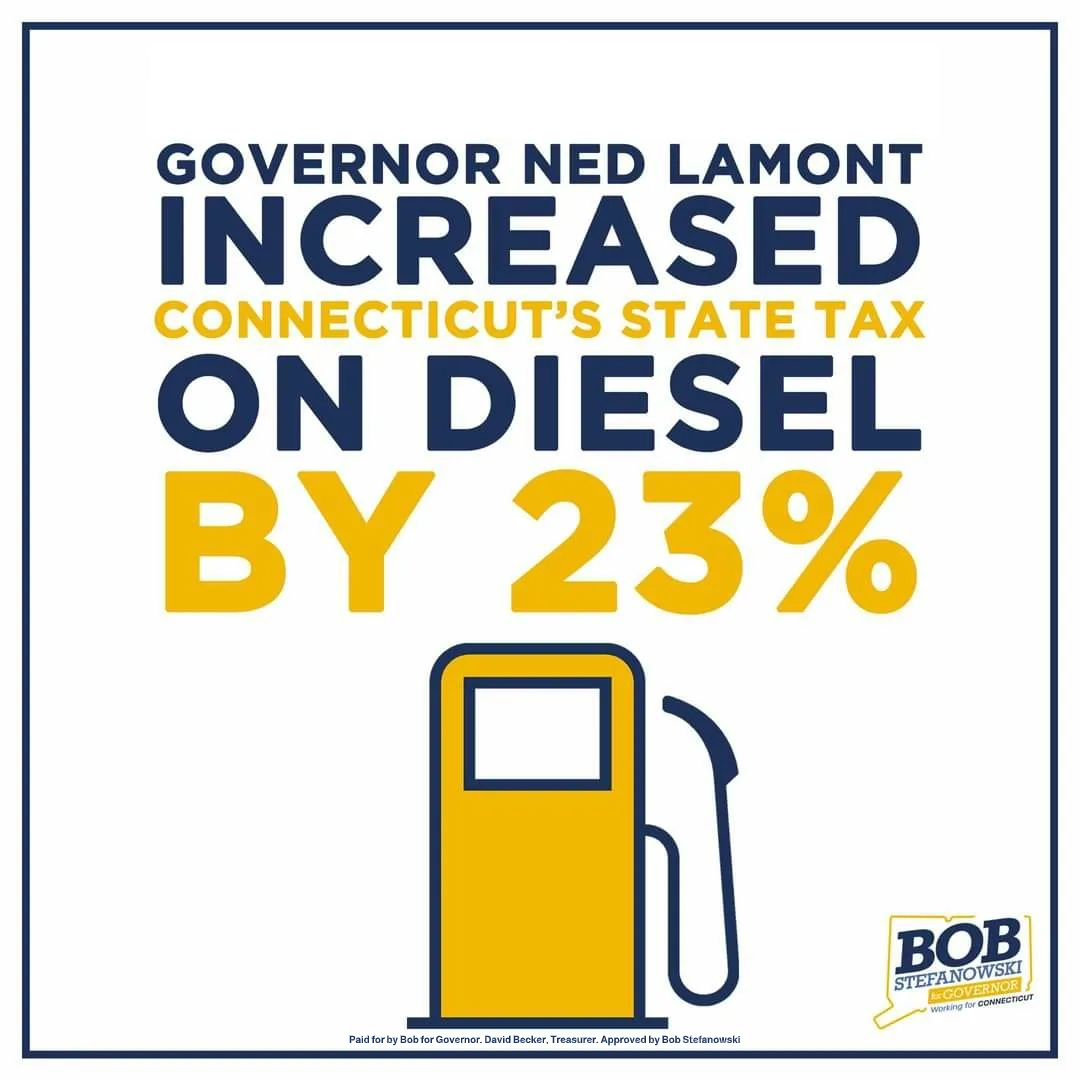
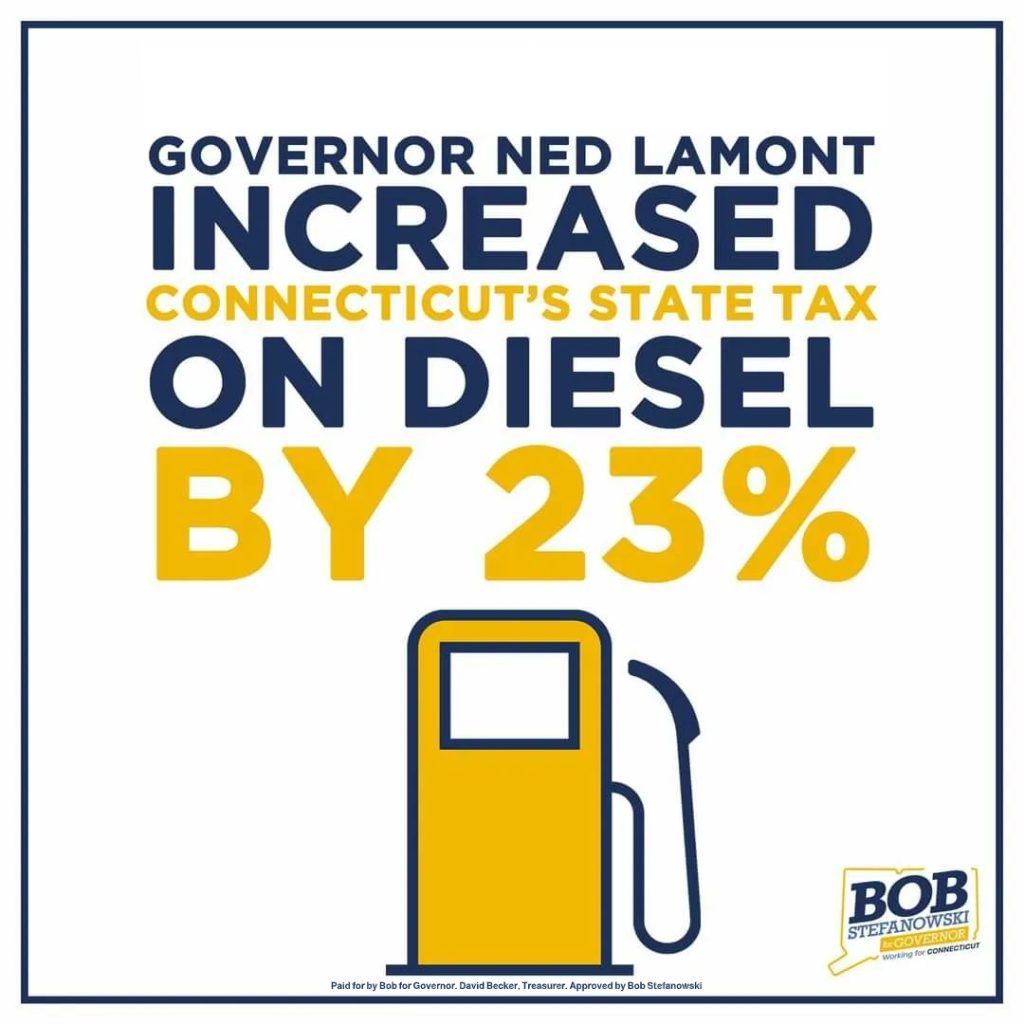
“Inflation is already costing Connecticut families over $650 each month. Governor Lamont had a chance to do something to stop it but he didn’t,” said Stefanowski. “This Biden/Lamont inflation crisis is costing you 40% more. Ned Lamont is leaving Connecticut with crumbs. Today, he’s jacking up your taxes, and raising costs on everything, by increasing the diesel tax by 23%. It’s now nearly 50 cents per gallon!”

Today, Bob Stefanowski and Laura Devlin spoke with neighbors and families who are struggling under Biden/Lamont inflation to explain that there is an alternative.

 “The prices we are all paying at the pump, the grocery store, and everywhere else do not lie. While Lamont is claiming he has cut Connecticut’s taxes, we are being forced to choose between life necessities. Businesses are being forced to pass on these inflationary operational costs onto consumers. We have a plan to lead Connecticut towards affordability and provide real relief to every Connecticut family and business. As you watch your household and company bills add up, remember that you have a choice this November,” said Devlin.  

In June, Bob Stefanowski and Laura Devlin shared their Plan to Immediately Relieve Inflation Costs:

  • Reduce the sales tax from 6.35% to 5.99%
  • Eliminate Governor Lamont’s 1.0% tax on food
  • Suspend Excise and Gross Receipts Tax on Gasoline through December 31st
  • Suspend Diesel Tax through December 31st
  • Cancel Governor Lamont’s Highway Use Tax (Truck Tax)
  • Pay Down Balance of the Unemployment Insurance to stop the over $400 million tax on small business.

This press release was made possible by:

ATTORNEY GENERAL TONG STATEMENT ON AQUARION WATER 27 PERCENT RATE HIKE REQUEST

(Hartford, CT) – Attorney General William Tong issued the following statement regarding a notice of intent filed today with the Public Utilities Regulatory Authority by Aquarion Water seeking to raise rates by 27 percent over three years. Eversource acquired Aquarion in 2017. While this is the first rate case filed by Aquarion since that acquisition, the company has imposed a series of escalating Water Infrastructure and Conservation Adjustment surcharges, now totaling a cumulative 10.3 percent. State statute caps those surcharges at 10 percent. Any hike beyond that requires a new rate case, which is why Aquarion is filing now.

“The Office of the Attorney General will intervene to vigorously review and scrutinize every aspect of this rate request. The last thing Connecticut families and small businesses need right now is a double-digit water bill hike, on top of steadily mounting surcharges. I fully support modernizing our aging water infrastructure, but we need to make sure we are doing it in a way that respects the financial pressures Connecticut families and small businesses are facing right now,” said Attorney General Tong.

Aquarion is seeking to raise rates 13.9 percent in year one, an additional 6.9 percent in year two, and an additional 4.2 percent in year three.

CT State Police 4th of July Stats

CT State Police 4th of July Stats as of Friday, July 1, 2022 12:00 a.m. to 5:00 a.m. Monday, July 4, 2022
5,008 Calls for Service
472 Motor Assists
254 Motor Vehicle Accidents (23 w/injury, 1 serious (Danbury), 2 fatal (Shelton, Norfolk))
45 DUI’s (12 from motor vehicle accidents)
211 Speeding violations
39 Seatbelts
146 Hazardous Moving Violations (unsafe lane change, following too closely, etc.)

This news report is made possible by:

Visit Interstate’s website at: https://ctbattery.com/
Exit mobile version